

Indonesia's cabotage law requires all commercial vessels in domestic waters to be Indonesian-built and Indonesian-flagged. What sounds like a bureaucratic regulation has preserved a centuries-old shipbuilding tradition and created a charter fleet unlike anything else in the world.
What Cabotage Means
Cabotage, derived from the French word "caboter" (to sail along the coast), refers to the transport of goods or passengers between two points within the same country. Most maritime nations restrict cabotage to domestically flagged vessels, protecting local shipping industries from foreign competition.
In practice, cabotage laws determine which vessels can operate commercially in a country's waters. In Indonesia, these regulations have had a profound and largely positive effect on the yacht charter industry.
How It Works in Indonesia
Indonesian Presidential Regulation No. 5 of 2010 (and subsequent amendments) requires that all vessels engaged in domestic commercial transport, including yacht charters, must meet three conditions:
This means a foreign-built yacht, regardless of its quality or the nationality of its owner, cannot legally operate commercial charters in Indonesian waters without meeting these requirements. A Sunseeker built in the UK or a Benetti built in Italy cannot simply sail to Indonesia and begin taking paying guests.
The regulation is enforced by harbor masters who issue sailing permits. Without the correct flag, registration, and documentation confirming local construction, a vessel will not receive clearance to operate commercially between Indonesian ports.
Foreign-flagged yachts can visit Indonesia on a cruising permit (CAIT) for private, non-commercial use. However, they cannot carry paying charter guests. This distinction between private cruising and commercial chartering is the core of the cabotage system.
The Unintended Consequence
The cabotage law was designed to protect Indonesian shipping companies from foreign competition in cargo transport. Its effect on the yacht charter industry was entirely unintended, but remarkable.
Because charter operators cannot import yachts, every vessel in the commercial fleet must be built in Indonesia. This requirement channeled investment directly into traditional shipbuilding communities. Foreign investors and Indonesian entrepreneurs who wanted to enter the charter market had no choice but to commission new builds from local yards.
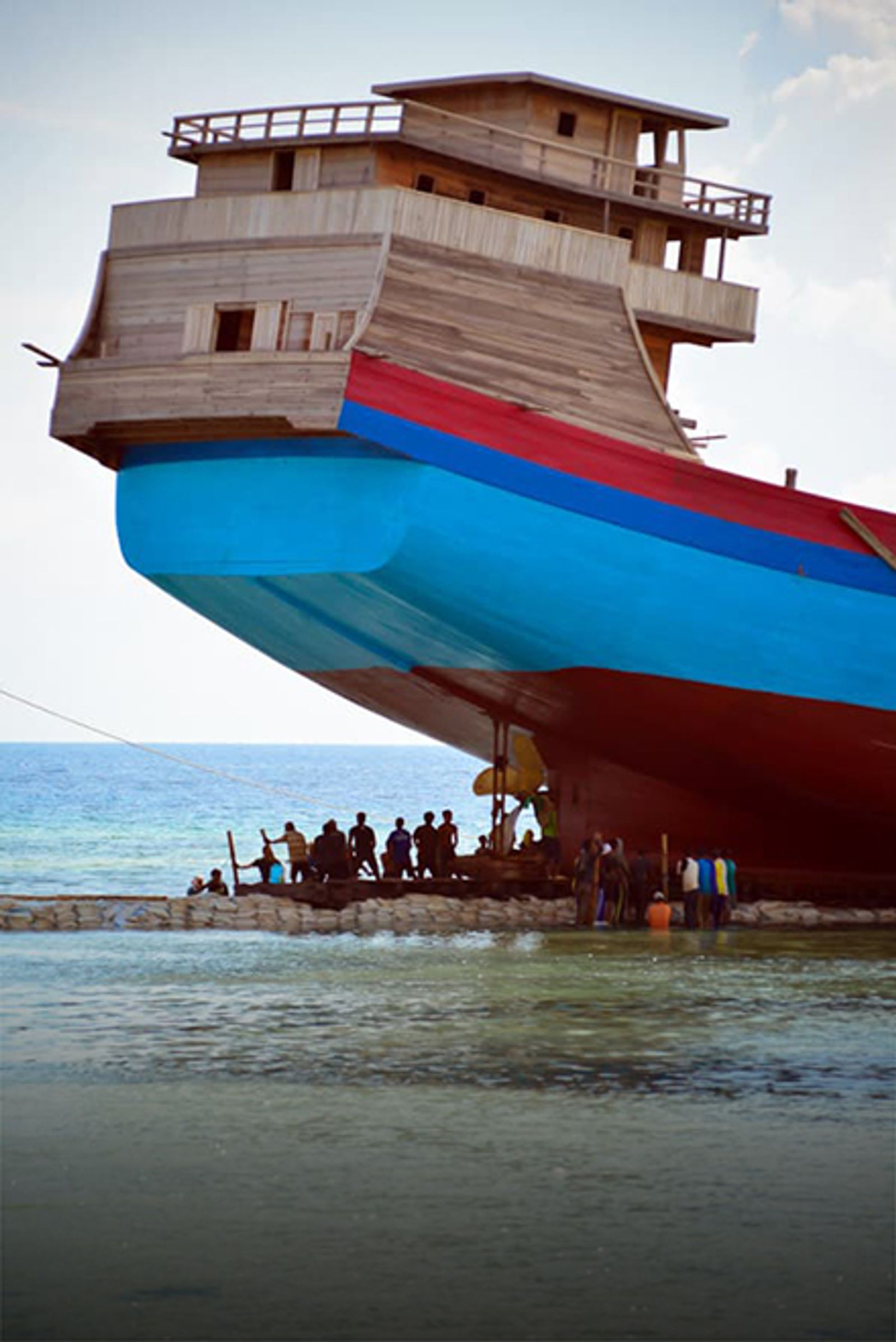
The shipyards of South Sulawesi, which might have seen their traditional skills become economically irrelevant as cargo shipping modernized, instead found a new and lucrative market. Master builders whose fathers built trading vessels found themselves constructing luxury yachts with air-conditioned cabins, marble bathrooms, and professional dive equipment, using the same shell-first techniques and ironwood keels their families had used for generations.
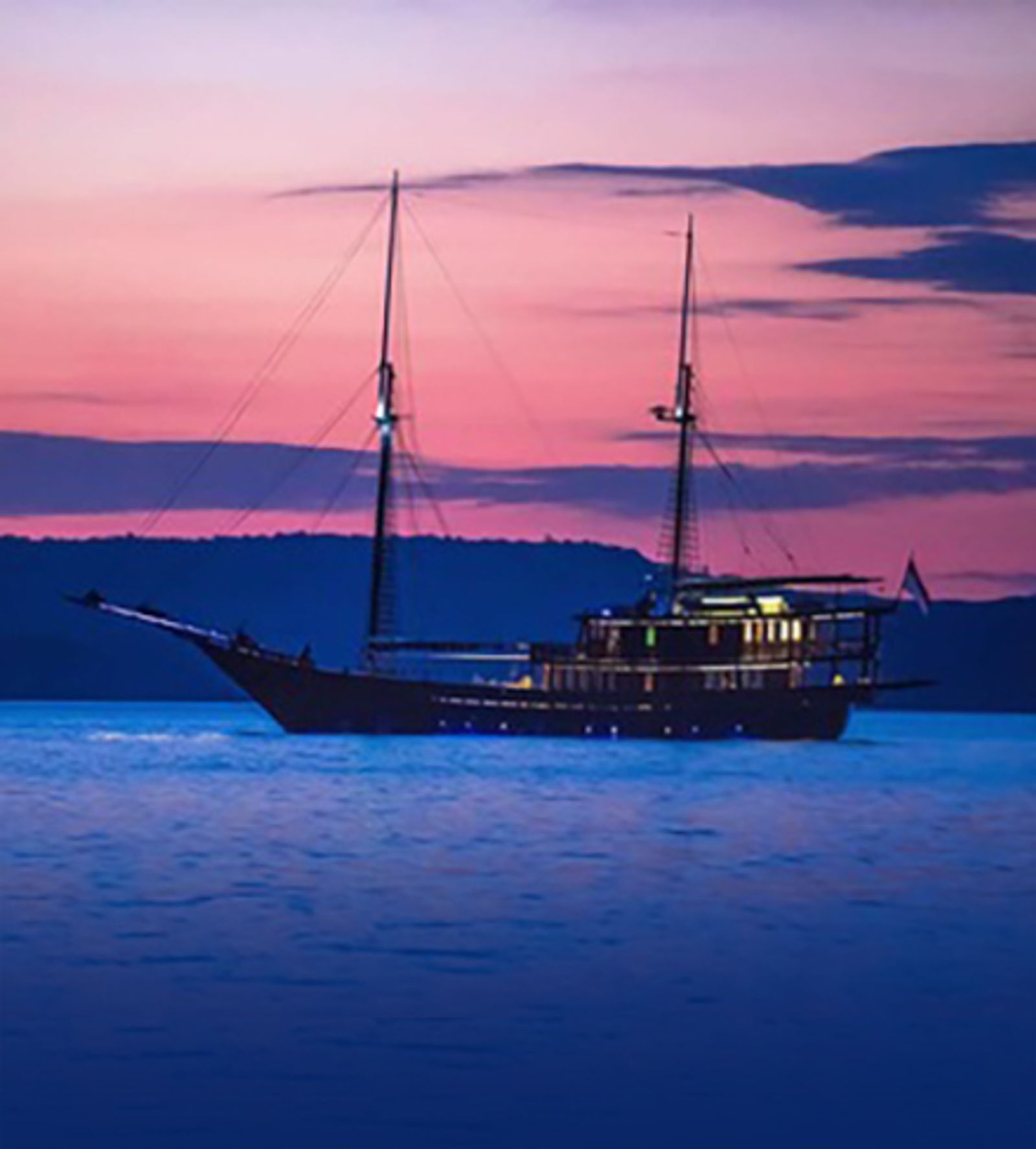
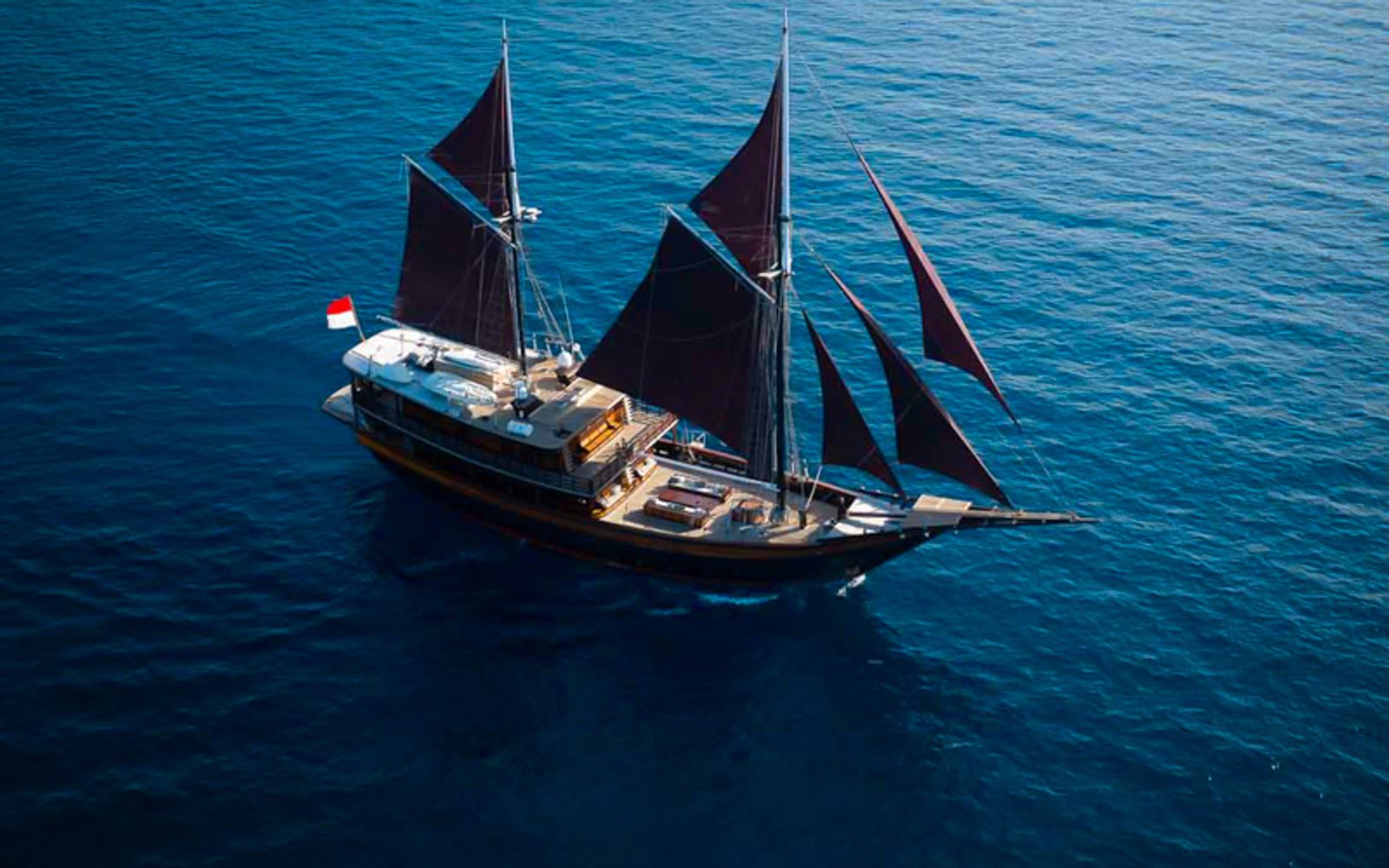
The result is a charter fleet that is architecturally and culturally unique. Nowhere else in the world does a commercial yacht charter industry operate exclusively on traditionally built wooden vessels. The Mediterranean has fiberglass motor yachts. The Caribbean has catamarans. Indonesia has phinisis.
What This Means for Charter Guests
For guests, cabotage produces two tangible benefits.
Authenticity
Every yacht you charter in Indonesia was built by hand in an Indonesian shipyard. The wood was sourced from Indonesian forests. The hull was shaped by artisans whose families have been building boats for generations. The crew is Indonesian. The flag is Indonesian. This is not a transplanted experience; it is indigenous to these waters in a way that charter fleets in other destinations are not.
Quality Through Specialization
Because the Indonesian fleet cannot rely on mass-produced foreign yachts, each vessel is a bespoke creation. Builders compete on craftsmanship, not volume. The best yards have waiting lists. The result is a fleet where individual vessels have distinct character, with construction quality that reflects years of focused, specialized work.
The trade-off is that Indonesia does not offer the type of modern fiberglass superyachts common in the Mediterranean. For guests accustomed to that style, the adjustment is real. Indonesian yachts are wooden, with the warmth, texture, and slight imperfections that come with handcrafted construction. Most guests find this character a significant part of the appeal.
The Broader Context
Cabotage laws exist in many countries (the Jones Act in the United States, for example, requires domestically built vessels for domestic shipping). Indonesia's application of this principle to the yacht charter sector is distinctive because it intersects with a living shipbuilding tradition that predates the regulation by centuries.
There are ongoing discussions within the Indonesian government about relaxing cabotage restrictions for tourism vessels, particularly as the country seeks to grow marine tourism as an economic sector. Any changes would have significant implications for the traditional shipbuilding industry and for the character of the charter fleet.
For now, the regulation remains in effect, and the fleet it has produced stands as one of the most distinctive collections of charter vessels anywhere in the world. When you step aboard a phinisi in Indonesia, you are boarding a vessel that exists, in its current form, because of a maritime law that was never intended to create anything of the sort.