West Papua, Indonesia

Triton Bay

The final frontier of West Papua diving.

Scroll
Oct-Mar
Peak Season
10-25m
Typical Visibility
Kaimana (KNG)
Nearest Airport
Year-Round
Whale Shark Window

Where West Papua's Wilderness Meets the Sea

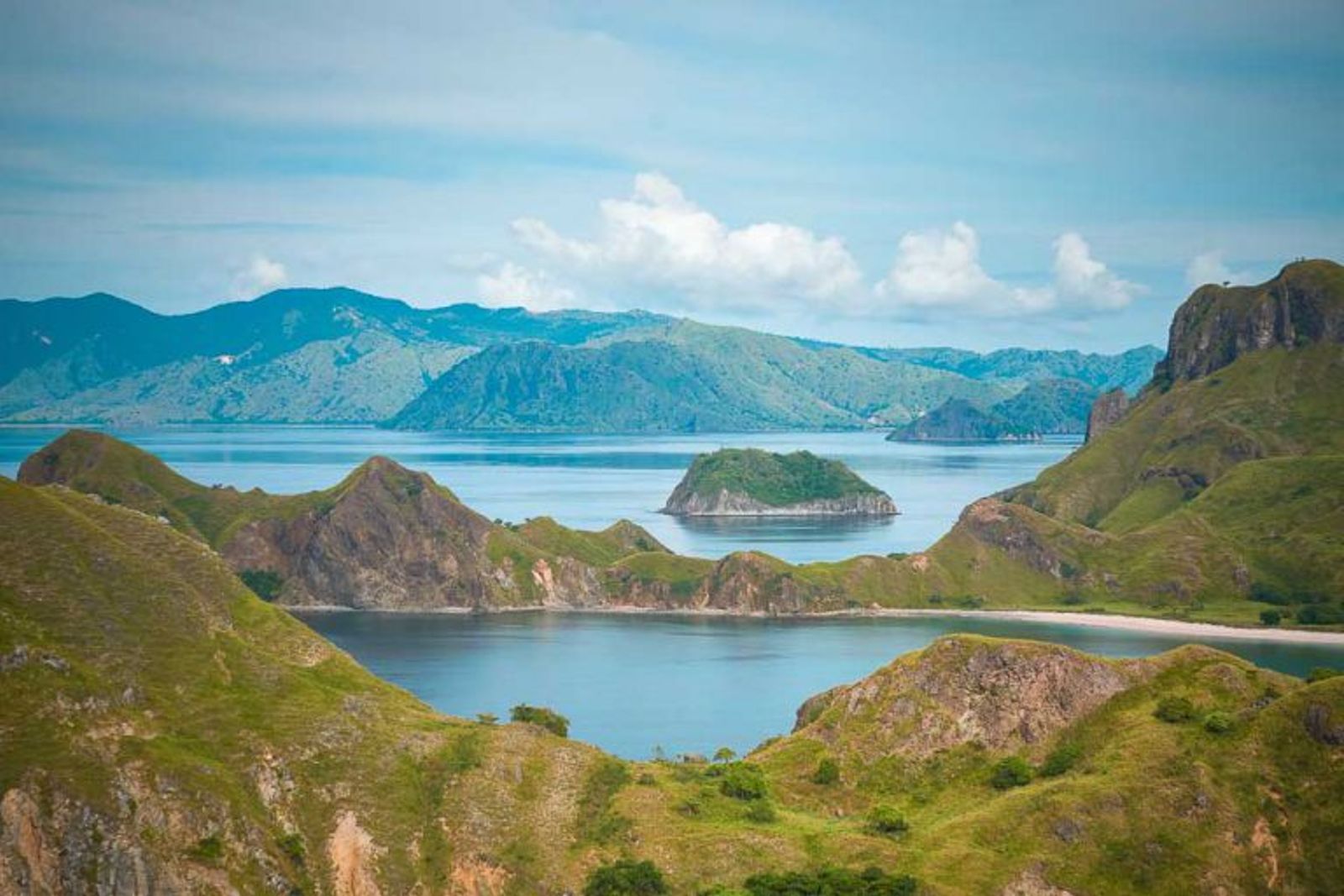
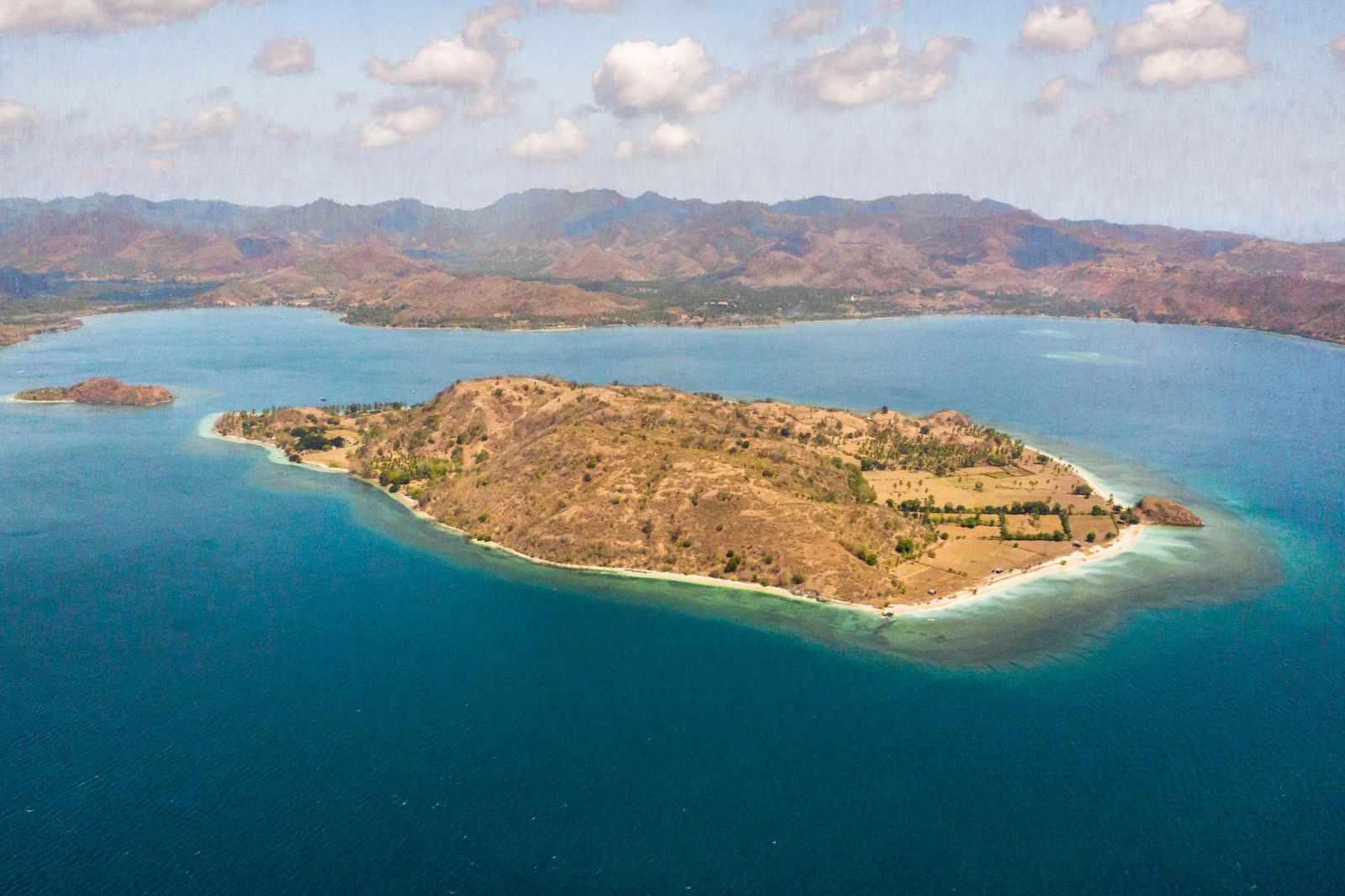
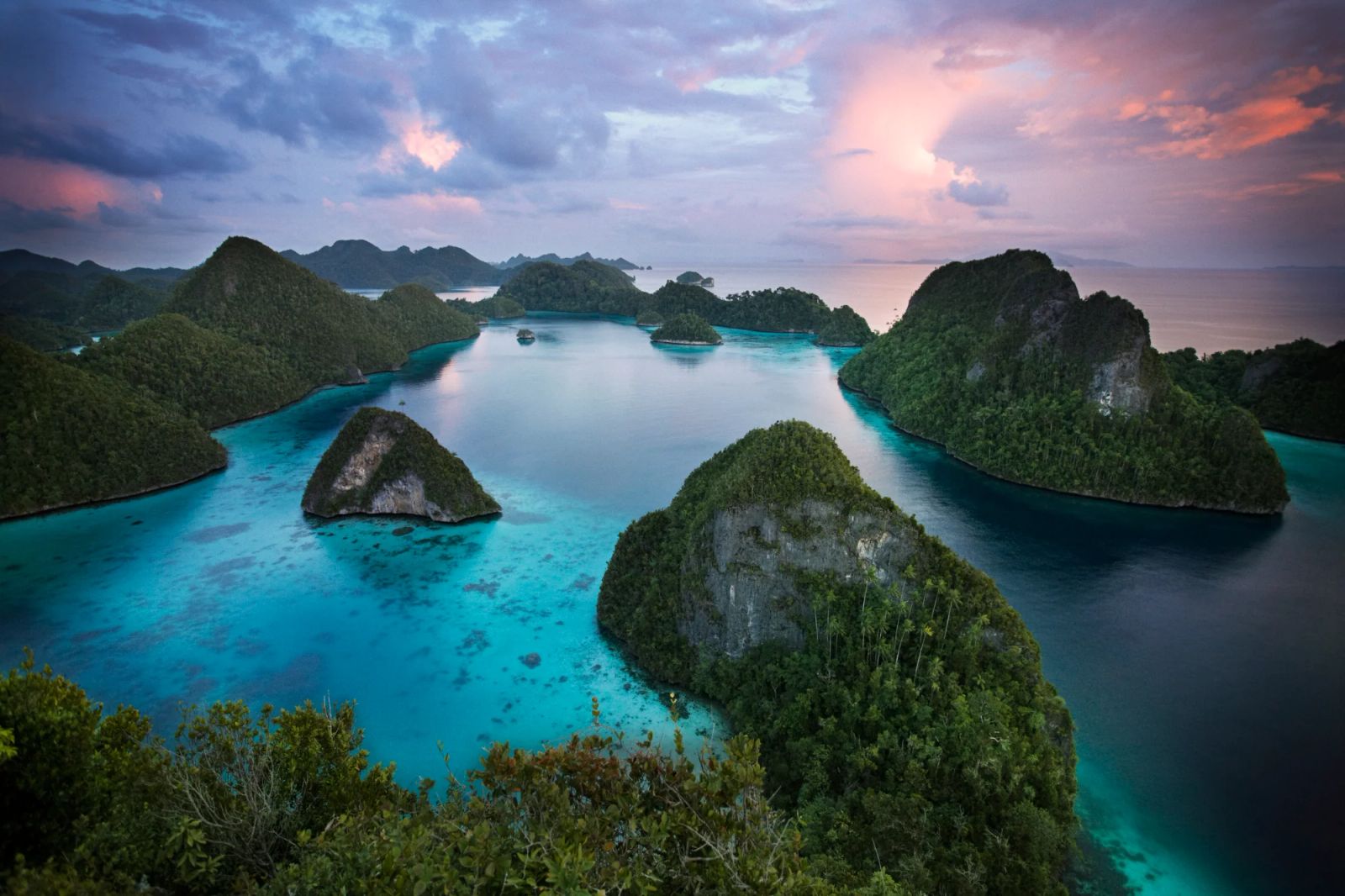
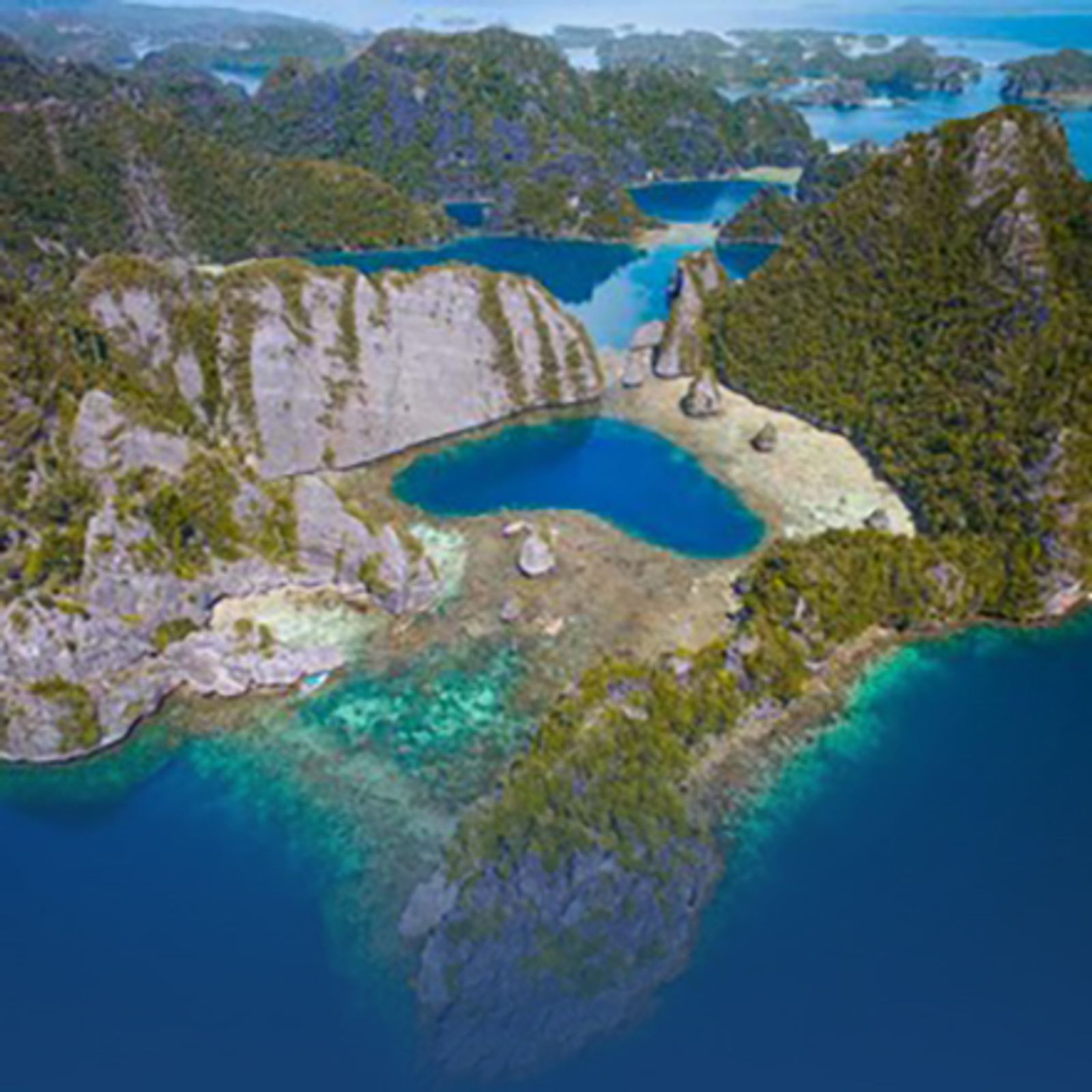
Triton Bay occupies the southern edge of the Bird's Head Peninsula, where the mountains of West Papua plunge directly into an enclosed bay of extraordinary biological richness. Protected from the open Banda Sea by a fringe of islands and reef systems, the bay's waters receive a near-constant inflow of nutrients from the Kamrau River and surrounding jungle watersheds. The result is an ecosystem of unusual density, where coral walls are draped in soft corals, and the water column above them teems with fish life at a scale that surprises even experienced divers who have explored the rest of West Papua.

The bay was little-known outside local fishing communities until the early 2000s, when word of its whale shark aggregations began to circulate among dive professionals working in the Bird's Head Seascape. The whale sharks here are a distinct population, drawn to the bay by the practices of bagan fishermen who have operated floating lift-net platforms in these waters for generations. The sharks feed on bycatch discarded during the night's catch, creating what may be the world's most reliable small-group whale shark encounter from a boat.

Triton Bay's diving operates across two distinct habitats. The outer reef systems along the bay's western entrance deliver current-fed wall diving with strong soft coral development and regular sightings of reef sharks, eagle rays, and barracuda schools. The inner bay, sheltered and shallower, holds the bagan platforms and their attendant whale sharks, the bay's signature encounter. Between these two zones lie a series of submerged pinnacles, cleaning stations, and muck sites where macro species, including multiple species of walking shark, frogfish, and pygmy seahorses, reward patient divers with exceptional photography.


Triton Bay's inner walls carry some of the densest soft coral coverage in the Bird's Head Seascape

Triton Bay's inner walls carry some of the densest soft coral coverage in the Bird's Head Seascape

"

There is nowhere else in Indonesia where you can dive a pristine outer reef wall in the morning, photograph walking sharks on a muck site at midday, and then slip into the water beside a six-metre whale shark before sunset. Triton Bay does all three.

Nikko, Indo Yachts Founder, Triton Bay

Why Triton Bay Is Different

Most dive destinations in Indonesia reward divers with excellent reefs. A smaller number reward them with memorable marine life encounters. Triton Bay is one of the very few that delivers what underwater photographers call a "full-spectrum" destination: macro, wide-angle, pelagic, and a signature megafauna encounter, all within the range of a single yacht anchorage.

The whale shark experience here differs meaningfully from the aggregations at Cenderawasih Bay or the open-water encounters at seasonal sites elsewhere in the archipelago. At Triton Bay, the sharks are typically individual animals or small groups, often juveniles, encountered in the bay's inner waters alongside the bagan platforms. The water is shallow, the animals are present year-round, and the scale of the encounter is intimate rather than spectacular. Many guests describe it as their most affecting wildlife experience of the voyage.

The diving itself is varied and technically accessible. Wall dives on the outer reef suit open-water divers comfortable in mild current. The muck sites require patience and a good eye rather than advanced skills. The bagan whale shark encounter is a surface snorkel as much as a dive. This makes Triton Bay one of the most inclusive destinations in the Bird's Head Seascape, equally rewarding for new divers and those with hundreds of logged dives in tropical waters.

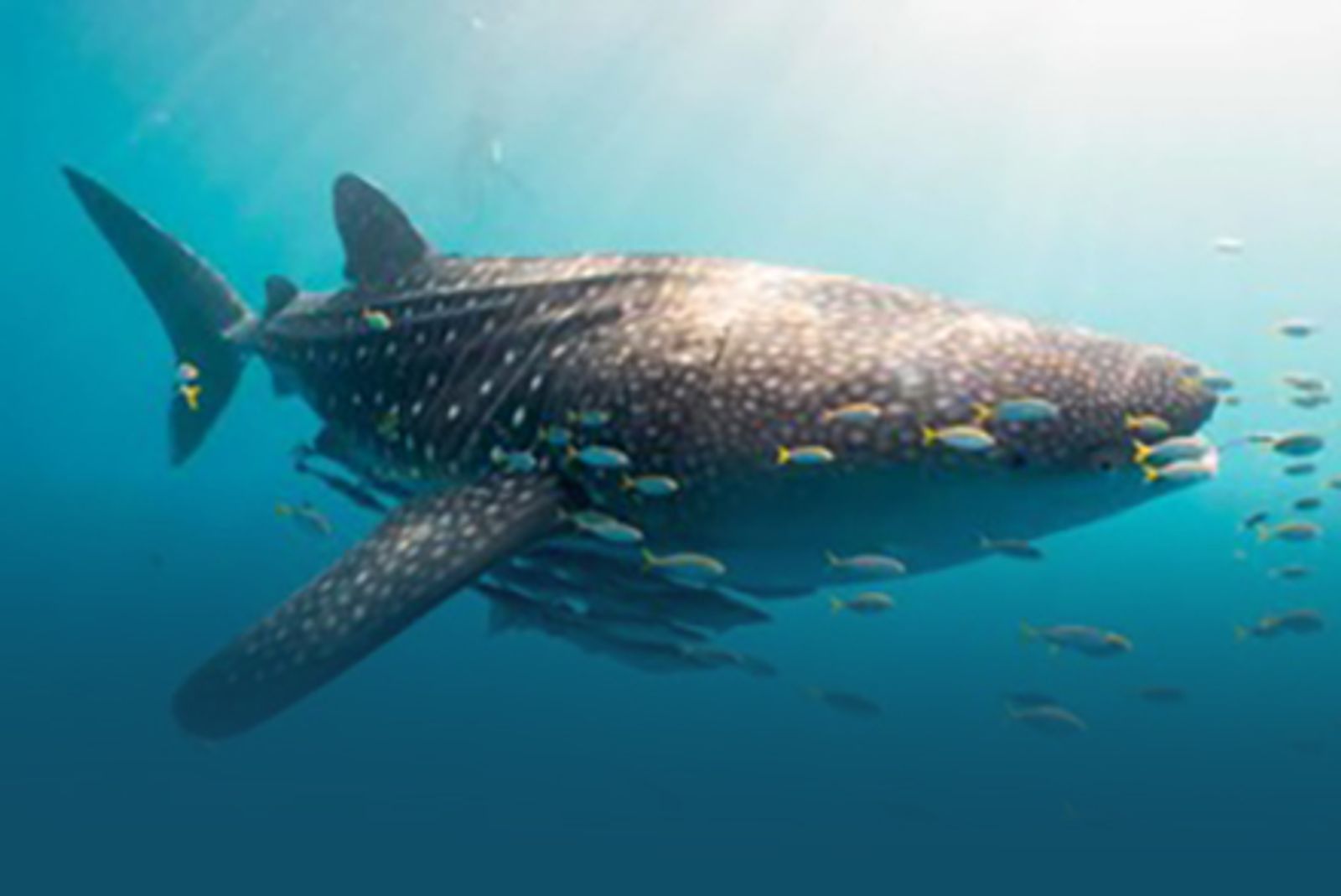
Whale shark encounter at Triton Bay bagan platform
Above the Surface

Beyond the Underwater World

Triton Bay's isolation is its defining above-water quality. The bay is enclosed by primary jungle that has faced no measurable development pressure, and the shoreline is accessible only by boat. Charter guests are typically the only visitors in the bay for the duration of their stay.

Kayaking and stand-up paddleboarding into the shallow mangrove creeks on the bay's eastern shore offer a different perspective on the ecosystem, with kingfishers, brahminy kites, and the occasional saltwater crocodile visible from the water's surface. The creeks connect to freshwater systems inland and are rich in birdlife at dawn and dusk.

The surrounding forest sits within the Kaimana regency, home to one of the most biologically intact lowland tropical rainforests remaining in West Papua. Where access to village communities is arranged in advance, guests can observe traditional sago palm processing and subsistence fishing techniques that have changed little over several generations. These encounters are at the discretion of local communities and are not guaranteed on every voyage.

Mangrove Kayaking

Tidal creeks and birdlife on the eastern shore

Night Sky

Zero light pollution; some of the clearest skies in the archipelago

Primary Rainforest

Intact lowland forest with exceptional bird diversity

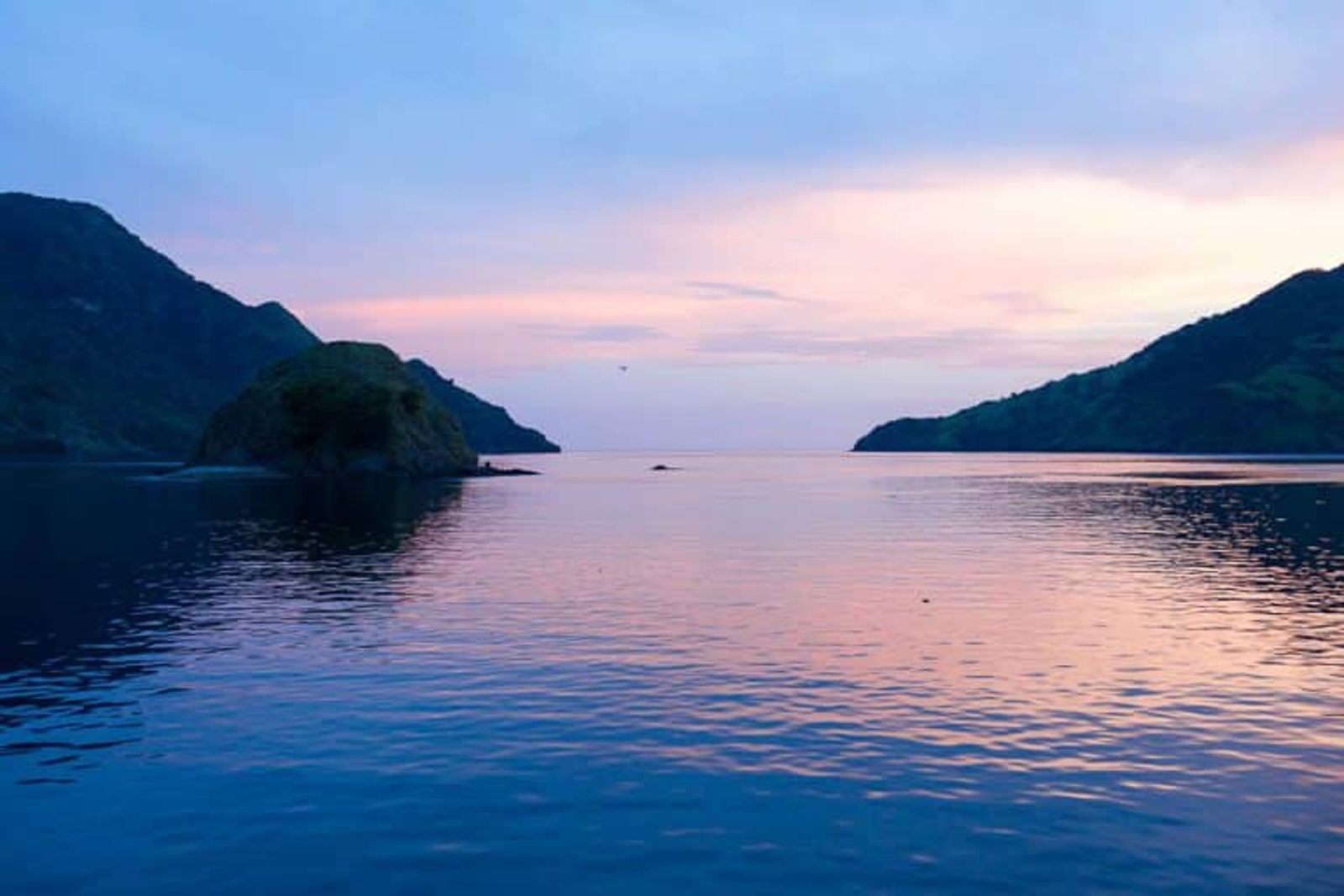
Triton Bay jungle coastline and calm waters at sunrise
Our Experience
Our Experience

We Know These Waters

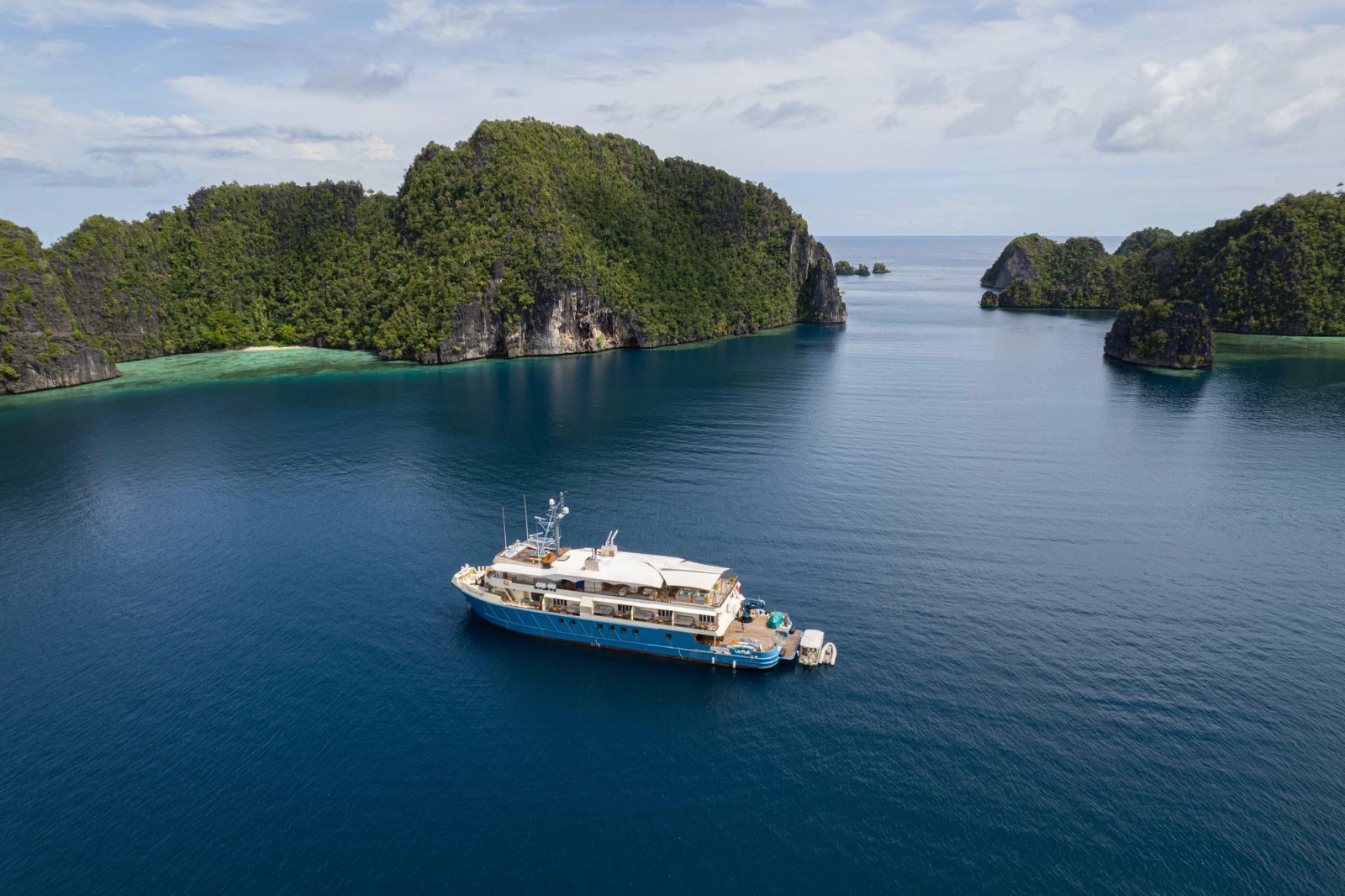
Triton Bay sits within our West Papua itinerary network. The captains we work with have navigated the bay's inner passages, identified productive muck sites not visible on any dive chart, and established the relationships with bagan operators that make the whale shark encounter possible. We do not publish a fixed itinerary for Triton Bay because the bay rewards flexibility. Where you dive depends on weather, current phase, and what was reported from the bagans the previous evening.

We can tell you what to expect honestly. Triton Bay is not Raja Ampat. The water column carries more particulate matter from the rivers. Visibility varies, and not every day will be the 25-meter clarity of the outer reefs. What it offers in exchange is a style of diving and a quality of encounter that nowhere else in West Papua replicates.

Since 2015

Operating in West Papua

West Papua

Primary Operating Region

Year-Round

Charter Access

Dive & Snorkel

Key Sites in Triton Bay

Triton Bay's diving spans outer reef walls, submerged pinnacles, shallow muck habitat, and the bagan platforms that host its signature whale shark encounters. The following sites are representative of the bay's core character.

Inner Bay, Year-Round

Inner Bay, Year-Round

The Bagan Platforms

Traditional floating lift-net platforms where juvenile and sub-adult whale sharks aggregate year-round to feed on discarded bycatch. The encounter is conducted as a guided surface snorkel with a maximum of four guests in the water at any time, preserving the quality and the animals' comfort. The sharks are accustomed to a boat presence but are entirely wild and free-ranging.

Whale Sharks Snorkel Year-Round
Outer Reef, Current-Dependent

Outer Reef, Current-Dependent

Outer Reef Walls

The reef systems flanking the bay's western entrance drop sharply into open water, producing wall dives with dense soft coral growth in orange, purple, and pink. Mild-to-moderate current on the incoming tide brings good visibility and pushes nutrients along the wall face, concentrating fish life at the reef edge. Whitetip reef sharks, schooling barracuda, and occasionally grey reef sharks are regular sightings at the wall's upper slope.

Wall Dive Soft Coral Reef Sharks
Inner Bay, Macro

Inner Bay, Macro

Inner Bay Muck Sites

The bay's sheltered inner waters include rubble and silty substrate areas that support an exceptional density of macro life. Painted frogfish, Ambon scorpionfish, flamboyant cuttlefish, various nudibranch species, and the epaulette walking shark are documented at accessible depths. Night dives on these sites significantly increase the species count. Water movement is minimal, making these dives suitable for photographers who need time to work a subject.

Macro Night Dive Walking Sharks

Marine Life

Biodiversity of Triton Bay

Triton Bay sits within the Bird's Head Seascape, the global center of marine biodiversity. Its position at the interface of riverine, mangrove, and open-reef habitat produces unusual species diversity across both macro and megafauna categories.

Rhincodon typus

Whale Shark

Rhincodon typus

Triton Bay hosts a year-round population of juvenile and sub-adult whale sharks associated with the bay's traditional bagan fishing platforms. The animals are reliably present and encounters are conducted in small groups in shallow water. This is one of the most consistent and least crowded whale shark experiences in the entire Indo-Pacific.

Hemiscyllium freycineti

Epaulette Walking Shark

Hemiscyllium freycineti

One of several walking shark species documented across the Bird's Head Seascape, the epaulette shark is found on Triton Bay's shallow inner reef patches at night. It navigates rocky substrate using pectoral fins in a characteristic walking motion, hunting crustaceans and small fish trapped in tidal pools. A species found nowhere outside the Indo-Pacific and extraordinary to observe in the field.

Antennarius pictus

Painted Frogfish

Antennarius pictus

Triton Bay's rubble and mixed substrate muck sites support multiple color morphs of the painted frogfish, including yellow, red, and black individuals. The species uses a lure to attract prey and is capable of remaining motionless for extended periods, making it both easily overlooked and highly rewarding to photograph once located. Night dives improve encounter frequency.

Dendronephthya spp. & allies

Soft Coral Assemblages

Dendronephthya spp. & allies

The nutrient loading from Triton Bay's river inflows drives exceptional soft coral biomass on the bay's wall and pinnacle sites. Dendronephthya sea fans in orange, red, and yellow dominate the wall faces between five and twenty meters. These structures provide habitat for pygmy seahorses, Coleman shrimp, and a range of commensal invertebrates that reward methodical searching by macro photographers.

The Numbers

  • 1,500+ Fish species in the Bird's Head Seascape
  • 600+ Coral species in the regional ecosystem
  • Year-Round Whale shark presence at the bagans
  • 4 Walking shark species in the Bird's Head Seascape
  • Zero Commercial tourism infrastructure on the bay

When to Go

Season Guide

Triton Bay is accessible year-round. Its enclosed geography provides natural shelter from both the northwest and southeast monsoons, making it one of the more weather-tolerant destinations in the Bird's Head Seascape. The whale shark encounter operates in all seasons.

Peak Season: October through March

The northwest monsoon period delivers the most settled conditions for Triton Bay. Seas inside the bay remain calm, visibility on the outer reef improves as river outflow decreases in October and November, and the whale shark activity at the bagans is at its highest density. December through February is the busiest period for charter traffic in West Papua generally, and Triton Bay is increasingly requested as an itinerary add-on or standalone charter destination during these months.

Water temperature ranges from 27 to 29 degrees Celsius during the peak season, with thermoclines possible on deeper outer reef dives during periods of upwelling.

Shoulder & Off Season: April through September

The southeast monsoon affects Triton Bay less severely than more exposed destinations in the region due to the bay's southern orientation and surrounding topography. April, May, and September are transitional shoulder months with variable but generally manageable conditions. June through August sees occasional swell reaching the bay's outer reefs, which can reduce diveable days on the western walls, while the inner bay sites remain accessible throughout.

Visibility tends to be at its lowest during the peak wet season months of July and August when river discharge is highest, though inner bay muck diving and the bagan encounters are unaffected by surface turbidity.

Month Conditions Visibility Mantas
January Excellent 10-20m High
February Excellent 10-20m High
March Very Good 12-22m High
April Very Good 10-18m Medium
May Variable 8-15m Medium
Jun-Aug Challenging 8-12m Low
September Improving 10-18m Medium
October Excellent 15-25m High
November Excellent 15-25m High
December Excellent 12-22m High
Peak
Shoulder
Off Season

Off-Peak Diving: Inner Bay Remains Accessible

Unlike more exposed destinations in the Bird's Head Seascape, Triton Bay's enclosed geography means the inner bay sites, including the bagan whale shark platforms and the muck sites, remain diveable throughout the southeast monsoon. Off-peak voyages should be structured around the inner bay rather than the outer reefs. Guests who prioritize the whale shark encounter over open-reef diving may find the shoulder months entirely satisfactory, with the additional benefit of lighter vessel traffic in the region.

Getting There

Logistics & Access

Departure City
Travel Time
Jakarta (CGK)
6-8 hrs 1 stop
Makassar (UPG)
3-4 hrs 1 stop
Sorong (SOQ)
1.5 hrs 1 stop
Ambon (AMQ)
1.5 hrs 1 stop
Bali (DPS)
5-7 hrs 1 stop
Singapore (SIN)
8-10 hrs 1 stop

Gateway Airport: Kaimana (KNG)

Kaimana Airport is the closest gateway to Triton Bay, located approximately 45 minutes by speedboat from the bay's entrance. Kaimana is served by Wings Air and Garuda Indonesia from Sorong, with connections from Jakarta, Makassar, and Ambon. Connections via Sorong are the most reliable routing option and allow guests to join a vessel already positioned in West Papua after an earlier Raja Ampat or Cenderawasih Bay leg.

Sorong (SOQ) as an Alternative Gateway

Sorong is the primary hub for charter operations across the Bird's Head Seascape and has the most reliable international connections via Makassar and Jakarta. Vessels positioning from Sorong to Triton Bay typically transit via the outer coast of the Bomberai Peninsula, a journey of two to three days depending on conditions and itinerary stops. This transit can be structured as a productive diving passage rather than a dead leg.

KNG

Nearest Airport

45 min

Speedboat to Bay

2-3 Days

Transit from Sorong

From the Charter Team

Insider Knowledge

Operational detail that only comes from time on the water. These are the things we wish someone had told us before our first Triton Bay voyage.

Insider knowledge card image

Time the Bagan Visit for First Light

The bagan operators work through the night and begin discarding bycatch in the early morning hours. Whale shark activity peaks between 06:00 and 09:00 when the discard volume is highest and the light for photography is best. Afternoon visits still produce encounters but typically with reduced shark numbers. We schedule the bagan as the first dive of the day whenever possible.

Insider knowledge card image

Manage Expectations on Visibility

Triton Bay's outer reef can reach 25 meters visibility in the dry season, but the inner bay consistently runs 8 to 15 meters due to river-borne particulate matter. This is normal and does not diminish the quality of the macro diving or the whale shark encounter, but wide-angle photographers expecting the crystal conditions of Raja Ampat should know in advance. Pack macro lenses and plan accordingly.

Insider knowledge card image

Night Dives Are Non-Negotiable

The epaulette walking shark, Triton Bay's most charismatic macro resident, is almost exclusively nocturnal. A single night dive on the inner reef patches will typically produce at least one encounter. The same dives also reveal hunting cuttlefish, octopus, and sleeping parrotfish whose coloring at night differs dramatically from daylight appearances. Budget at least two night dives across a standard voyage.

Continue Exploring

You May Also Like

Triton Bay pairs naturally with the other extraordinary diving destinations of West Papua and the Bird's Head Seascape. Many Indo Yachts voyages combine two or more of these regions on a single charter.

Further Reading

From the Journal

Dispatches from Indonesia's most extraordinary waters. Yacht features, expedition reports, and the stories behind our most memorable charters.
Questions

Triton Bay FAQ

Are the whale shark encounters guaranteed?

No encounter with wild animals can be guaranteed, but the bagan-associated whale sharks of Triton Bay are as reliably present as any marine megafauna encounter in Indonesia. The animals have used these platforms year-round for as long as the bagans have operated. The captains we work with communicate with the bagan operators ahead of each visit to confirm current activity. Guests on standard voyages encounter the sharks on the overwhelming majority of visits.

How does Triton Bay compare to Raja Ampat?

Raja Ampat has greater reef diversity, more consistently high visibility, and more established dive infrastructure. Triton Bay offers a different experience: more isolated, with a singular whale shark encounter that Raja Ampat does not replicate, and macro diving of equal or superior quality. They are complementary rather than competing destinations and are best understood as different registers of the same exceptional region.

What diving experience level is required?

Open Water certification is the minimum. Triton Bay's core experiences, including the bagan whale shark encounter and the inner bay muck sites, are accessible to beginner divers. The outer reef wall dives in mild current suit intermediate divers. Advanced certification is not required, but divers with 20 or more logged dives will be more comfortable and will get more from the sites.

How do I reach Triton Bay?

The most direct routing is via Kaimana (KNG), served by Wings Air and Garuda from Sorong. Sorong is the primary West Papua hub with connections from Jakarta, Makassar, and Bali. Guests joining a longer West Papua circuit typically embark in Sorong and position to Triton Bay via the outer coast. We arrange all transfers and can advise on the best routing for your origin city.

Interested in Chartering Triton Bay?

Please get in touch to discuss planning your private charter.