


Raja Ampat Yacht Charter Guide
Raja Ampat is not one destination. It is four.
Fifty thousand square kilometers, four distinct regions, three days of cruising end to end. Choosing where to focus and when to go matters more here than anywhere else in Indonesia. This guide covers how.

The Region Decision
Raja Ampat is not one destination. It is four, loosely organized around the archipelago's compass points, and the first planning conversation always concerns which ones to include.
Central Raja Ampat, the area around Mansuar, Gam, Kri, and the Dampier Strait, is where most first-time charters concentrate. The headline dive sites are here: Cape Kri, which holds the world record for fish species counted on a single dive at 374, Sardine Reef, Manta Sandy, and the mantas of Arborek. Topside, limestone karst islands rise straight from the water throughout the region.
Southern Raja Ampat is Misool. It is several hours of cruising further south and less visited, with dense marine life and coral as healthy as anywhere in the archipelago. Visibility at sites like Boo, Magic Mountain, and Fiabacet can run lower than in the central region, a fair trade for the sheer amount of fish in the water. Misool feels remote in a way that the central region no longer does.
Northern Raja Ampat is Wayag and the Equator islands. Wayag is the karst landscape made famous by aerial photographs: dozens of jungle-topped limestone domes scattered across turquoise lagoons. It is the topside highlight of the archipelago, but the cruising distance from Sorong is substantial. A Wayag-inclusive itinerary needs space to breathe.
Eastern Raja Ampat, including the Fam Islands and Piaynemo, sits between the central region and the northern Wayag stretch. Piaynemo's viewpoint over the Star Lagoon is the most photographed and busiest spot in Raja Ampat, simply because it is the easiest to reach. A Piaynemo morning pairs well with central-region dives, and from there we can take you to quieter viewpoints nearby where the formations are just as striking and the crowds are gone.
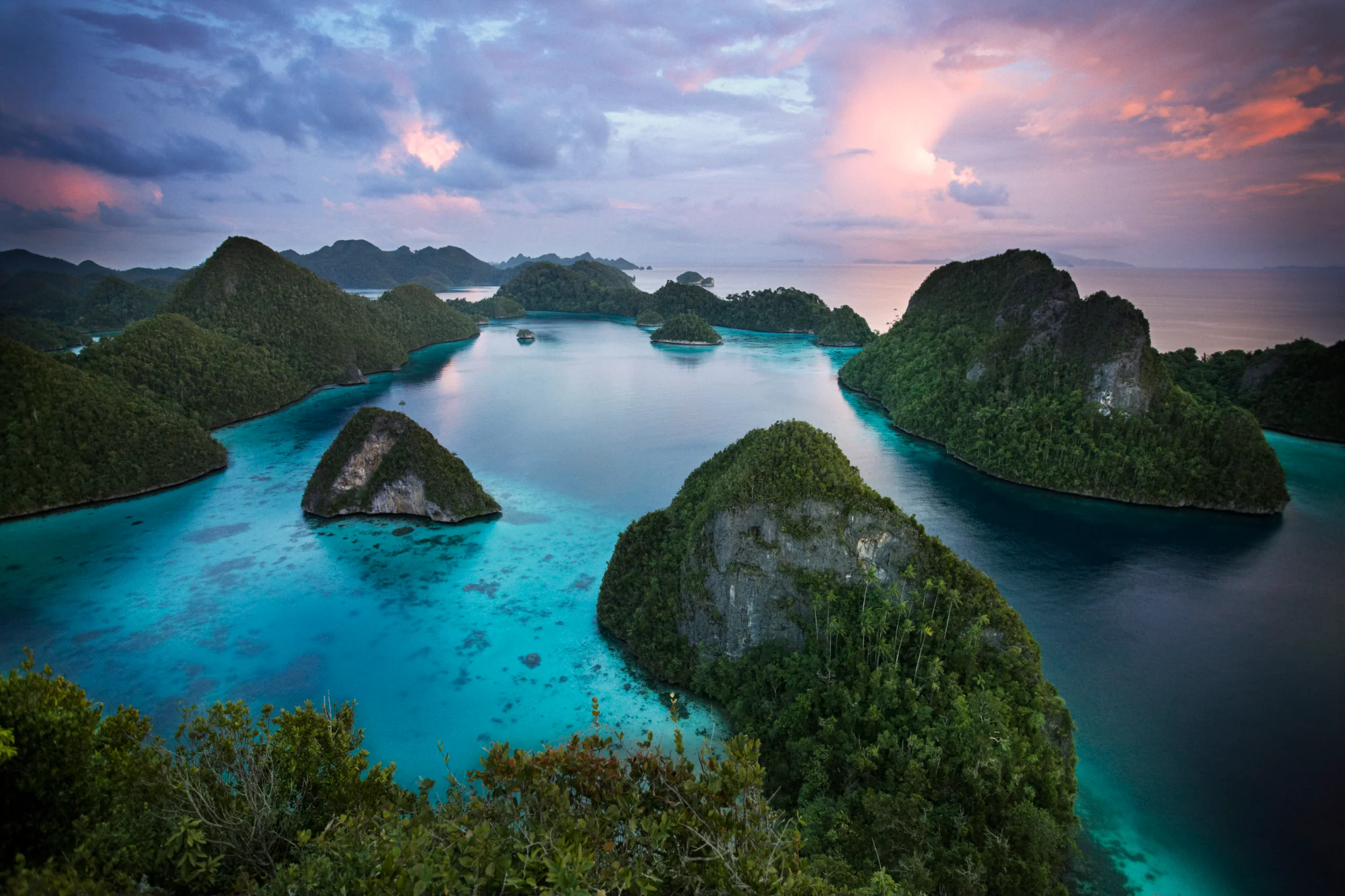
Central Raja Ampat plus Piaynemo: the strongest first charter, with short cruising distances between sites.
For a first-time charter of seven to ten nights, focus on central Raja Ampat plus Piaynemo. The signature dive sites are concentrated here, the karst photography is excellent, and the cruising distances stay short. Misool and Wayag are best treated as separate trips for the guests who want to see them properly.
How Long the Trip Needs to Be
The shortest defensible Raja Ampat charter is seven nights, and seven is tight. Sorong is itself a destination guests travel a full day to reach from most of the world. Spending less than a week on the yacht after that travel makes the math poor. Seven nights in the central region delivers a strong introductory charter: roughly five full diving days, the iconic Piaynemo sunrise, and a credible sampling of what Raja Ampat is.
Ten nights is the comfortable answer for most groups. It opens enough margin to include either Wayag (north loop) or Misool (south loop), without compressing the central region. Ten nights is also the threshold where guests stop counting days and start settling into the rhythm of the yacht, which is where the charter experience actually begins.
Twelve to fourteen nights is the depth charter. Both Misool and Wayag in one trip. Time for repeat visits to the dive sites that turned out to be favorites on the first day. Beach days, village visits, the slower parts of the experience that get cut from shorter itineraries. This is the length for guests for whom the journey to Sorong is itself a substantial commitment, and who want the trip to justify it.
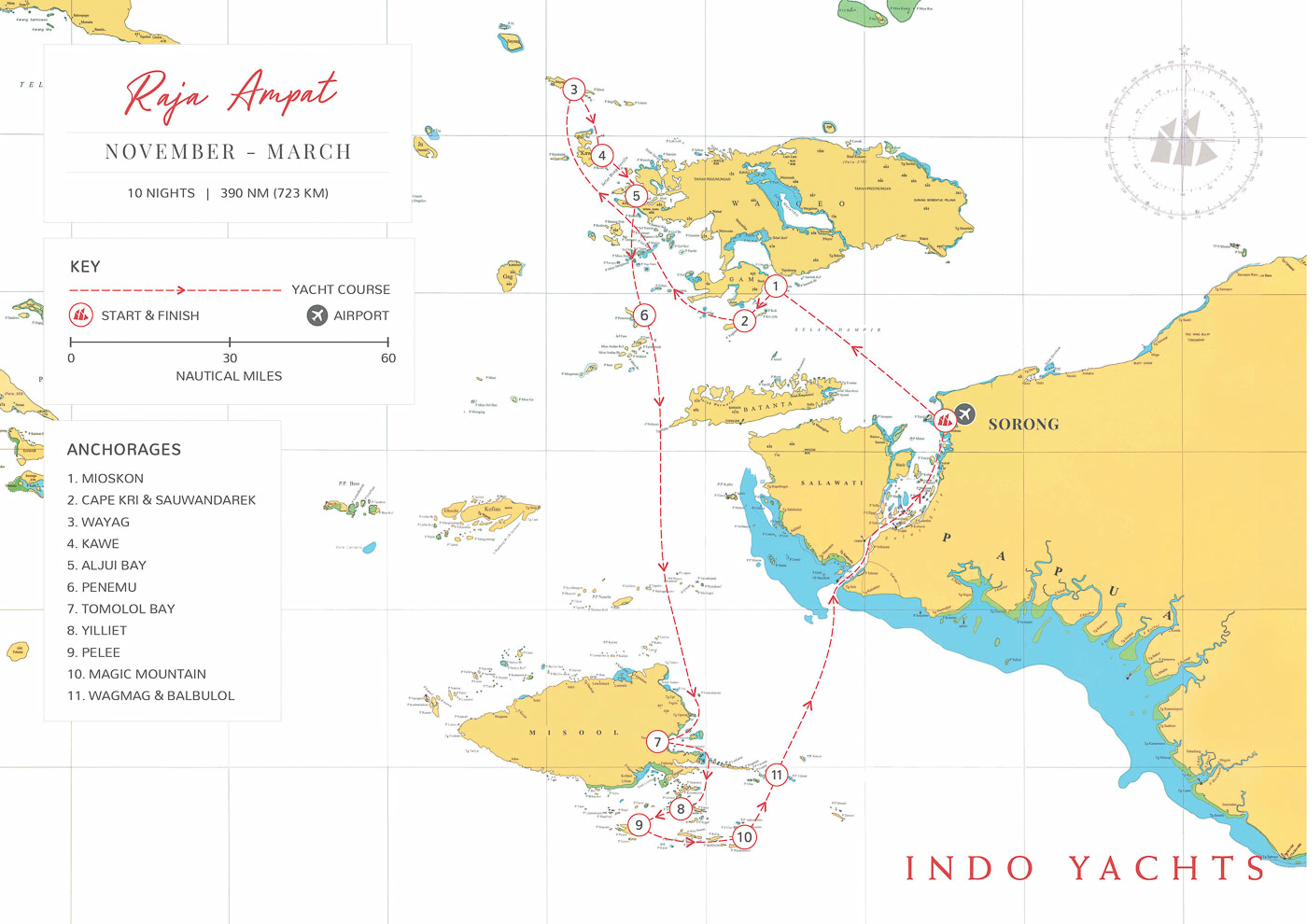
Ten nights is the comfortable length for most groups, with room to add either Wayag or Misool.
Sorong is reached via Jakarta or Makassar, typically with an overnight stop, then a morning flight into Domine Eduard Osok Airport. For most international guests, this is two travel days each way. Build it into the schedule honestly: a seven-night charter is really a nine-day commitment, and we recommend a buffer night in Bali, Jakarta, or Sorong on the way in for guests on a tight connection.
Season Selection
Raja Ampat's primary season runs October through April. The peak window is December through February, when the equatorial waters are calmest, visibility is best, and the resident reef manta population at Manta Sandy is most reliably present. The seasonality here is gentler than Komodo's: Raja Ampat does not close in May-September, but conditions become less predictable, certain sites become difficult, and the chartering rhythm shifts.
October and November are the early season. The southeast trade winds taper. Visibility builds. The first charters of the season usually launch in mid-October. This is a strong window for guests who want the destination at its quietest, before the December peak arrives.
December through February is peak, and demand matches the conditions: these are the months guests ask for most, and the first to sell out.
March and April are the late season. Conditions remain excellent through March; April begins to see the first weather variability of the transition. For guests planning a long charter in March, this is often the best month of the entire season: peak conditions, slightly thinner crowds, more flexible yacht availability.
May through September is the southeast trade wind season. Charters do run during this period, but the routing changes. Misool, in particular, becomes wind-exposed and the southern sites become difficult to access reliably. Some yachts reposition to other destinations during these months. If May to September is the only available window for the trip, we generally recommend considering a different Indonesian destination for that year and waiting for the proper Raja Ampat season.
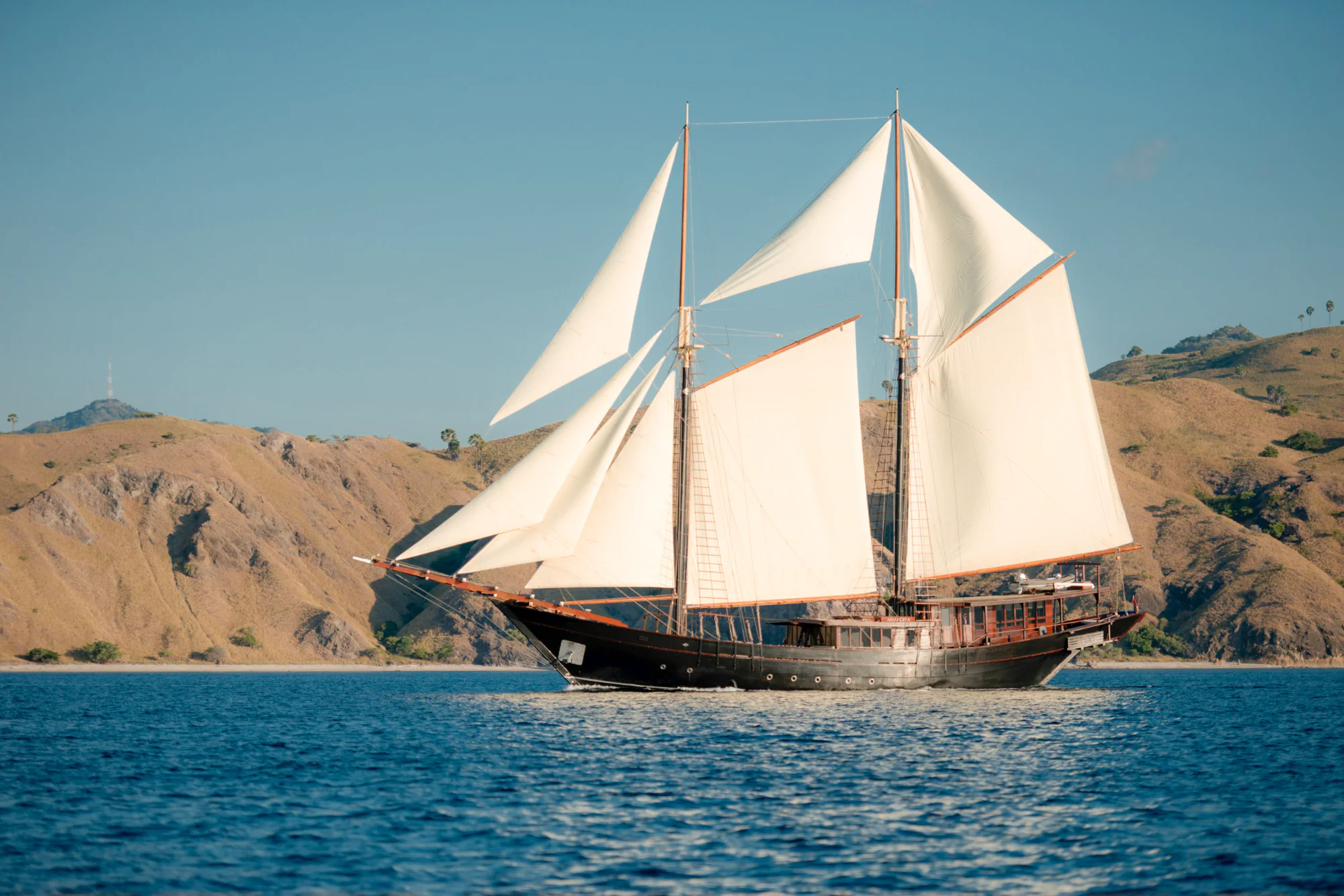
December through February is peak, with the calmest water and the most reliable manta aggregations.
Yacht Sizing and Onboard Capability
Yacht sizing for Raja Ampat follows the same group-to-capacity logic as Komodo, with one important difference: range. The cruising distances are longer here, the resupply points are fewer, and a yacht's range and fuel capacity matter more than they do anywhere else in eastern Indonesia. The phinisi that work well in Komodo are not all suited for Wayag-inclusive itineraries.
Matching Yacht to Group
- Two to four guests: a 30 to 40 meter phinisi used below capacity, with very high service density.
- Six to eight guests: a 40 to 50 meter phinisi or compact superyacht, the optimal balance of space and intimacy.
- Ten to twelve guests: a 50 to 60 meter yacht at full cabin use.
- Wayag or Misool routing: range and stability become decisive; not every yacht is appropriate, so confirm range before booking.
Two onboard capabilities that matter more in Raja Ampat than elsewhere: a strong dive operation and a capable tender for shore excursions. The remoteness of many anchorages means the yacht's own dive guides and equipment carry more weight here than in destinations with easy access to outside operators. Tender capability matters for the Piaynemo viewpoint hike, where a stable tender at a sometimes-swelly landing is the difference between a comfortable shore visit and a difficult one.
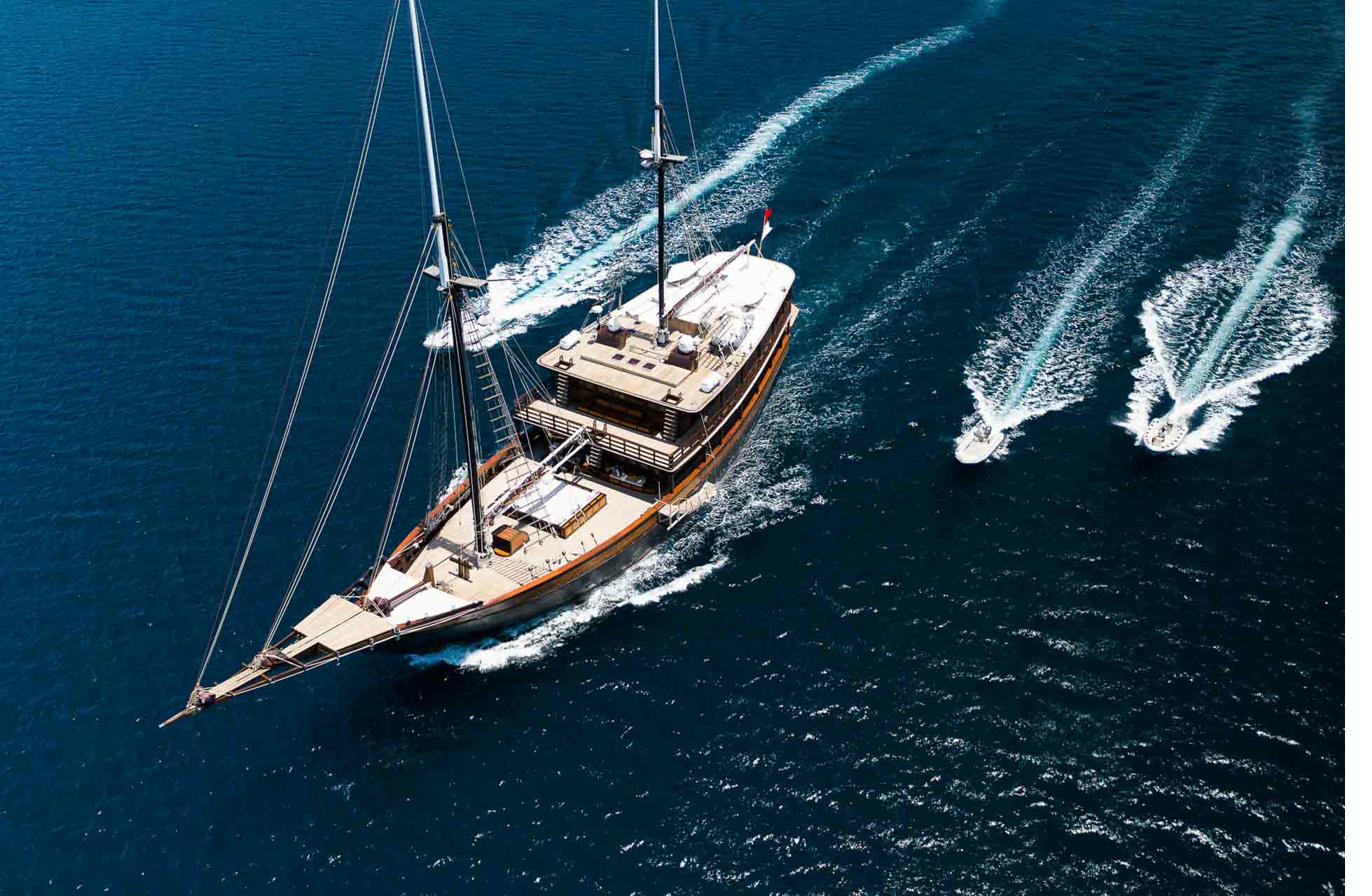
The karst landscape of central Raja Ampat. The yacht that can reach and anchor near these formations is not the same yacht that runs comfortably in open Indonesian waters.
Mixed-Interest Groups
Raja Ampat works well for mixed-interest groups, but the framing is different from Komodo. The diving here is the destination's central event, and groups where the divers significantly outnumber the non-divers will end up shaping the itinerary around dive sites. Where Komodo offers genuine parity between underwater and topside experiences, Raja Ampat skews underwater, with the karst topside coming second.
For non-divers in a mostly-diving group, the satisfying experiences are the topside ones: the Piaynemo viewpoint over the Star Lagoon, the Wayag summit climb, snorkeling at Manta Sandy where the rays surface in five meters of water, village visits to Arborek, kayaking through the mangroves. Several of our strongest mixed-group itineraries pair a serious dive program for the divers with a topside guide who accompanies the non-divers on shore each day.
There is plenty to see from the surface here, where shallow, sunlit reef makes snorkeling a pleasure.
Raja Ampat is excellent for older children who snorkel, less ideal for very young children. The remoteness means medical evacuations are slow, and the destination's reward depends on time in or near the water. We recommend Raja Ampat charters for families with children eight and older. For families with younger children, Komodo's shorter distances and more frequent shore opportunities are usually the better Indonesian charter destination.
The Booking Timeline
Raja Ampat books further ahead than any other Indonesian destination. The peak December-February window on the most desirable yachts is typically committed twelve to eighteen months in advance. Christmas and New Year weeks, in particular, are often booked two years out by repeat clients. For shoulder months (October-November, March-early April), six to nine months ahead is reasonable. Last-minute charters within three months are possible when a booking moves, but the available choice is narrow.
Once a yacht and dates are confirmed, a deposit secures the charter within seven days of agreement. The rest of the planning timeline is the subject of our companion guide on what happens after you book. From confirmation forward, the work shifts to preferences, itinerary drafting, and the operational care of building the trip around the lead guest's intentions.
What to Push For, What to Skip
The most common planning mistake in Raja Ampat is trying to include too much geography in too few days. A twelve-night itinerary that touches central, Misool, and Wayag is a transit itinerary; guests spend more time relocating than diving. Better to cover one region thoroughly than three superficially.
What to Insist On
- Two dives per day in the central region, three only on request.
- An overnight anchor near Piaynemo so the viewpoint hike can happen at dawn light.
- Time at Manta Sandy on multiple days, since manta behavior varies from morning to afternoon.
- Cape Kri at slack tide and the slack-to-current shift, not at midday peak current.
- A village visit on Arborek or Sawinggrai, scheduled deliberately rather than as a filler day.
- A beach day with a barbecue ashore, chosen by the captain rather than requested by guests.
What to Reconsider
- Combining Misool and Wayag in a single seven- or ten-night charter. The geography does not permit it.
- Beginning the trip in Bali rather than Sorong. The reposition to Raja Ampat eats four days of cruising each way.
- Booking a yacht primarily on cabin count. Range, dive operation, and tender capability matter more here than in any other destination.
- Visiting in May-September because it fits the calendar better. Wait for the proper season or pick a different destination for that trip.
A Brief Word on What Raja Ampat Actually Delivers
The numbers around Raja Ampat are not marketing inflation. The 374 fish species recorded on a single dive at Cape Kri, the 75 percent of the world's coral species found within the archipelago, the more than 1,500 resident fish species: all of it is the actual scientific record.
The photographs do not tell the whole story. They miss the heat, the smell of the mangroves, and the quiet of an anchorage at dusk after a long day in the water. Guests who arrive expecting a marine theme park are often surprised that the place rewards patience. The ones who come for somewhere old, slow, and genuinely remote tend to book again.
One thing worth telling a first-time guest: Raja Ampat reveals itself slowly. The first dive is not always the best one, and a famous site can be outdone by an ordinary patch of reef on the third day. The yacht, the crew, and the time on the water are what make the trip.
The destination earns its reputation slowly. The yacht, the crew, and the time on the water assemble the experience.
Practical Guides
Everything you need to know before chartering in Indonesia. From costs and logistics to destination comparisons and packing lists.


Continue Exploring
Dispatches from Indonesia's most extraordinary waters. Yacht features, expedition reports, and the stories behind our most memorable charters.

Planning a Raja Ampat Charter?
Tell us your dates, your group, and what you want from the trip. We will draft an itinerary and pair it with the right yacht.