


Best Time to Charter
At any time of year, somewhere in Indonesia is at its best.
The question is not when to visit, but which region matches your dates. This guide covers the monsoon cycle, the prime window for each region, the seasonal wildlife worth planning around, and where the value sits.
How Indonesia's Seasons Work
Indonesia does not have a single best season. It has a rotating calendar of optimal windows, with different regions peaking at different times of the year.
Two monsoon systems govern the cycle. The southeast monsoon, locally musim timur, runs roughly May through October and brings dry conditions and steady southeast winds to the southern and eastern islands. This is the prime season for Komodo, Alor, and the southern regions. The northwest monsoon, musim barat, runs roughly November through March, bringing wetter conditions and winds from the northwest. This is the prime season for Raja Ampat, Triton Bay, and West Papua.
April and October are transitional months when the monsoon shifts. Conditions can be excellent in both eastern and western regions during these windows, and they often represent the best combination of good weather and favorable pricing.

Two monsoon systems rotate through the year; when one region is out of season, another is at its best.
Choose the destination first, then identify the optimal dates, rather than fixing dates and trying to make a destination fit.
The Season Calendar
The list below shows the prime window for each major charter region, and the months to avoid. When Komodo is out of season, Raja Ampat is at its peak; when both are in transition, the Banda crossing opens.
Prime Windows at a Glance
- Raja Ampat: October through April, peaking December through February. Avoid May through September.
- Komodo: April through November, calmest April to June and September to October. Avoid December through March.
- Cenderawasih Bay: May through October, though whale sharks are present year-round. Heaviest rain January through March.
- Triton Bay: October through April, the same rhythm as Raja Ampat.
- Alor: April through October, the same rhythm as Komodo.
- Banda Sea crossing: October through November, with a secondary window in March and April.
Raja Ampat and West Papua
Raja Ampat is at its best from October through April, when the northwest monsoon brings calm seas, warm surface temperatures, and excellent visibility. October through December is the sweet spot: the seas have settled after the monsoon transition, visibility peaks at 20 to 30 meters, and the marine life is in full display. The Dampier Strait sites, including Cape Kri, Blue Magic, and Sardine Reef, are all in excellent form.
January and February are the peak months for manta activity, when large aggregations of reef mantas gather at cleaning stations and surface temperatures sit at a warm 29 to 30 degrees Celsius. March remains good; April becomes variable as the southeast monsoon builds. We advise planning for March as the last reliable prime-season month.
Triton Bay follows the same northwest-monsoon rhythm, with October through April the standard window. The nutrient-rich water there trades some visibility for extraordinary soft-coral growth, and whale sharks gather at its bagan platforms as they do in Cenderawasih. It is usually combined with a Raja Ampat charter, flying into Kaimana.
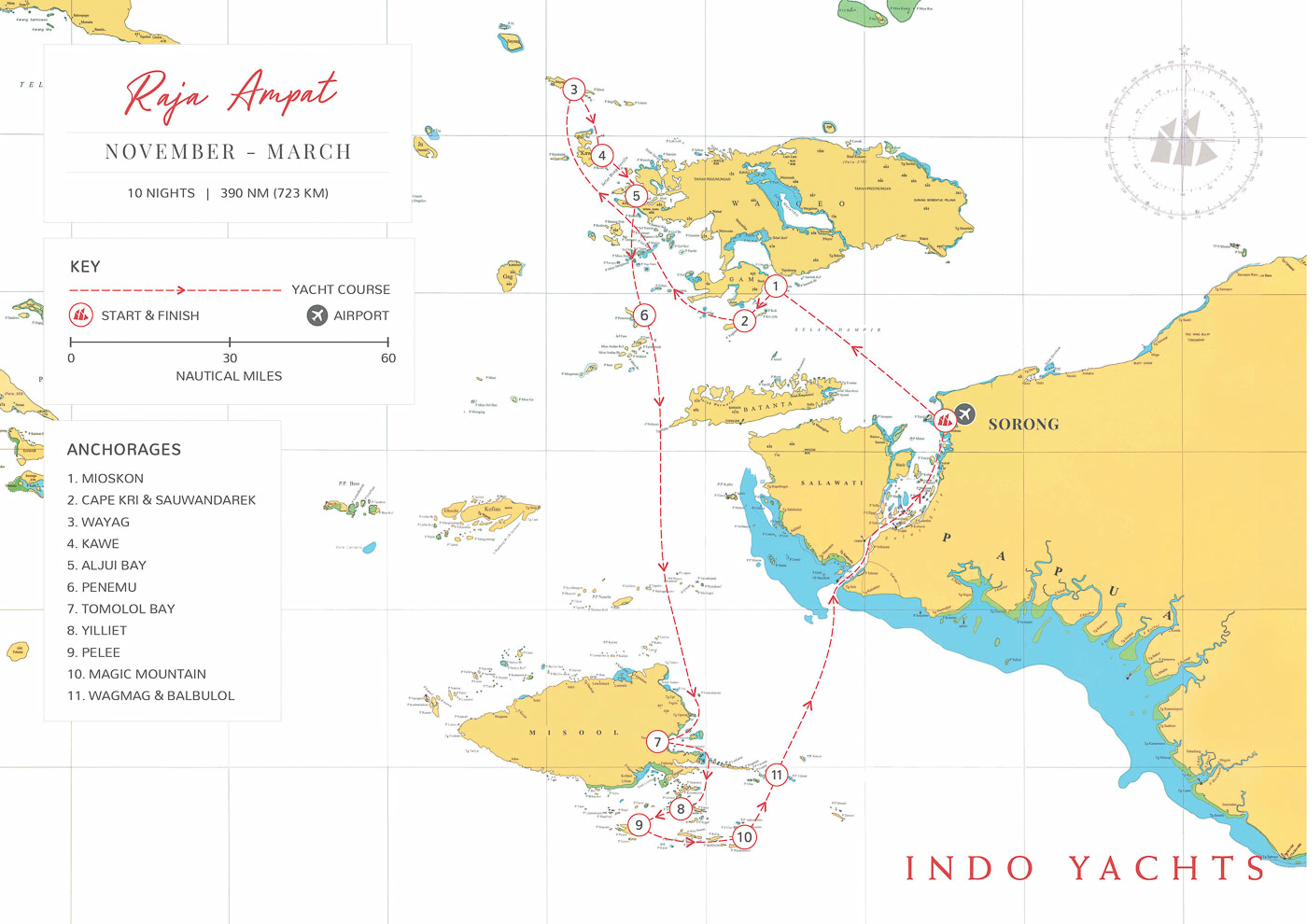
Raja Ampat peaks October through April, with the warmest water and best manta activity in January and February.
Komodo and the Lesser Sundas
Komodo operates on the opposite cycle to Raja Ampat. The southeast monsoon brings dry, stable conditions from April through November, with the calmest seas from April through June and again in September and October. April through June is our preferred window: calm seas, warm water, active mantas at Makassar Reef, and fewer vessels than during the European summer.
July and August are peak tourist season, with excellent weather but more boats around the dragon-viewing sites; booking well ahead is essential. From August into September the Komodo upwelling brings cooler, nutrient-dense water from depth, drawing mantas, sharks, and dense fish schools to the southern sites. Surface temperatures stay comfortable, but at depth the water can drop to 22 to 24 degrees, so a 5mm wetsuit is recommended. October and November are excellent shoulder months: thinner crowds, good conditions, standard pricing.
Alor follows the same southeast-monsoon pattern, best April through October, and is most often reached as an eastward extension of a Komodo charter through Flores and the Solor and Alor straits. The currents there are powerful, which is both the draw for divers and the reason local dive-master experience matters. Its volcanic-sand macro diving rivals Lembeh Strait.
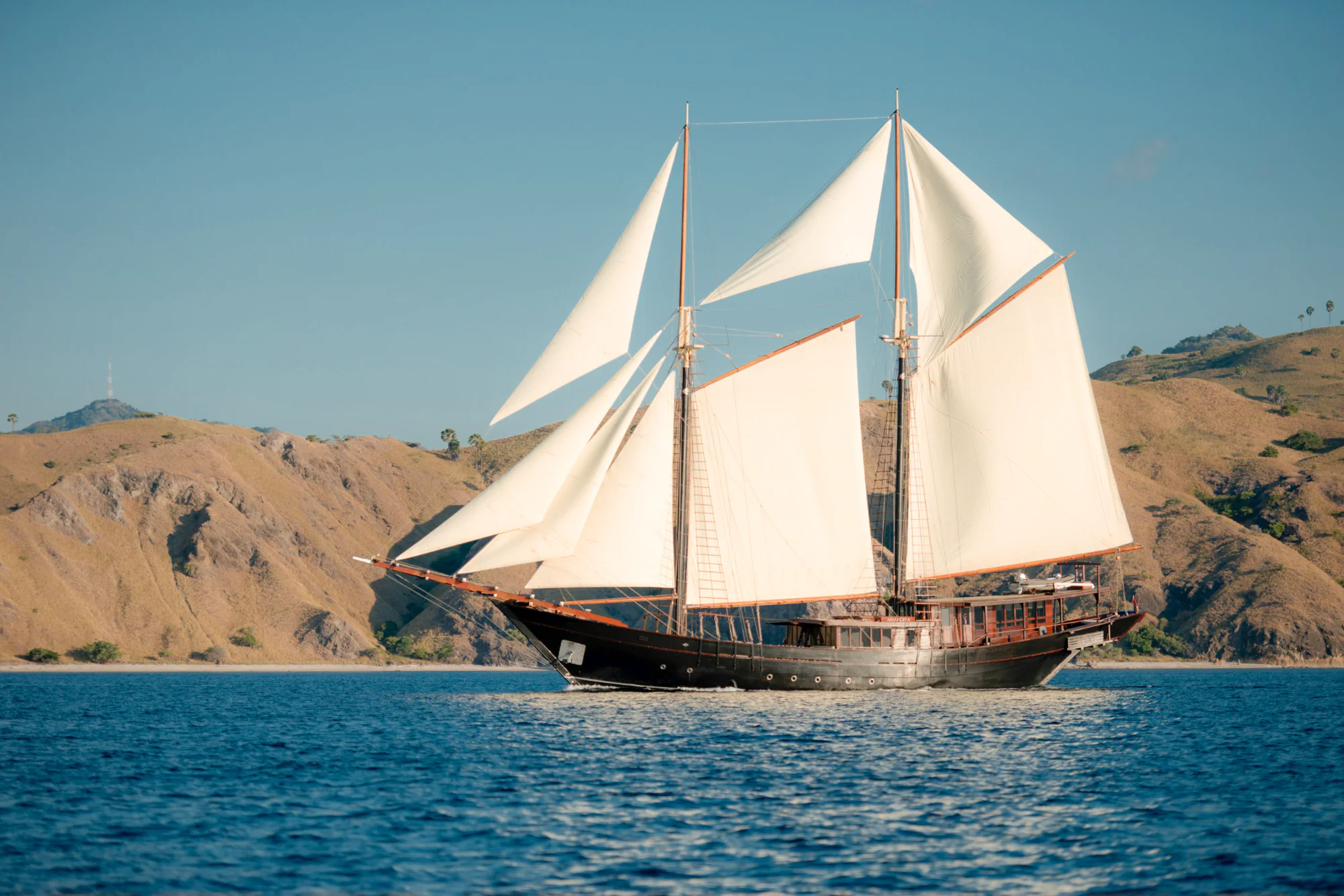
Komodo's dry, stable season runs April through November, the inverse of Raja Ampat.
Cenderawasih Bay
The whale sharks of Cenderawasih Bay are present year-round, which is what makes the destination unique. Their association with the bagan fishing platforms is not seasonal the way migratory whale-shark encounters are elsewhere. Sea conditions are calmest and most reliable from May through October, which is why most charters are scheduled in that window.
Encounters are private to your group, as each platform is visited by a single yacht at a time, and it is not unusual to see six or more whale sharks feeding simultaneously around one platform. Cenderawasih is often combined with a Raja Ampat charter as part of an extended voyage, with the whale-shark portion scheduled to fit the bay's optimal window.

Cenderawasih's whale sharks are present year-round, with the calmest sea conditions May through October.
The Banda Sea Crossing
The Banda Sea crossing operates in a narrow window. The primary season is October through November, when conditions between Ambon and Raja Ampat are most favorable for the open-water passages the route requires. A secondary window sometimes opens in March and April for crossings in the opposite direction.
These are expedition-grade voyages of ten to fourteen nights across some of the deepest water in the archipelago, with diving at volcanic seamounts and steep coral walls, the possibility of hammerheads and thresher sharks, and the historic Banda Islands where the global spice trade began.
Conditions outside the optimal months can be genuinely rough, with large swells and strong winds that make the open-water passages unsafe for comfortable chartering. We only recommend Banda Sea crossings during the established windows.
Marine Life Calendar
Certain encounters are seasonal, and planning around them can shape an entire charter. No wildlife encounter is guaranteed, but these are the windows with the highest probability of sightings, based on years of operational experience.
Seasonal Encounter Windows
- Manta rays, Komodo: most active at Makassar Reef and nearby cleaning stations from May through September.
- Manta rays, Raja Ampat: gather at Dampier Strait and Wayag cleaning stations November through February, peaking in January and February.
- Whale sharks, Cenderawasih Bay: present year-round at the bagan platforms, best conditions May through October.
- Whale sharks, Triton Bay: present at bagan platforms during the October through April season.
- Hammerhead sharks, Banda Sea: possible at the deep seamounts during the October through November crossing, never certain.
- Walking sharks, Raja Ampat: epaulette sharks visible on night dives year-round through the season.
- Birds of paradise, Raja Ampat: red birds of paradise at dawn display sites on Waigeo, most active in the early morning.
Pricing and Best Value
The most expensive months to charter are July, August, and the Christmas and New Year period from mid-December through early January. High-season pricing typically runs 10 to 20 percent above standard rates, and the most popular yachts sell out a year in advance.
The best value sits where conditions are excellent and pricing is at or below standard. April through June in Komodo offers prime conditions, fewer boats, and standard pricing, with mantas and calm seas but no summer premium. September and October in Komodo bring the post-summer shoulder, with crowds gone and rates back to standard. October through early December in Raja Ampat opens the season with peak visibility before the Christmas premium arrives.
A quiet anchorage at golden hour, early in the Raja Ampat season.
Early December in Raja Ampat is one of the most undervalued windows in the entire Indonesian charter calendar. The season has opened, visibility is often at its best, and the Christmas price premium has not yet begun.
When to Book
For peak windows, the most sought-after yachts are booked a year or more in advance. July and August in Komodo, and December through February in Raja Ampat, are the first to sell out, and Christmas and New Year weeks book earliest of all.
Booking Lead Times
- Peak season on a specific yacht: twelve months or more ahead.
- Shoulder months: six to nine months ahead is comfortable.
- Last-minute: possible within a few months when a booking moves, though choice narrows quickly.
If your dates are fixed, let them choose the region rather than forcing a region into the wrong season.
Practical Guides
Everything you need to know before chartering in Indonesia. From costs and logistics to destination comparisons and packing lists.


Continue Exploring
Dispatches from Indonesia's most extraordinary waters. Yacht features, expedition reports, and the stories behind our most memorable charters.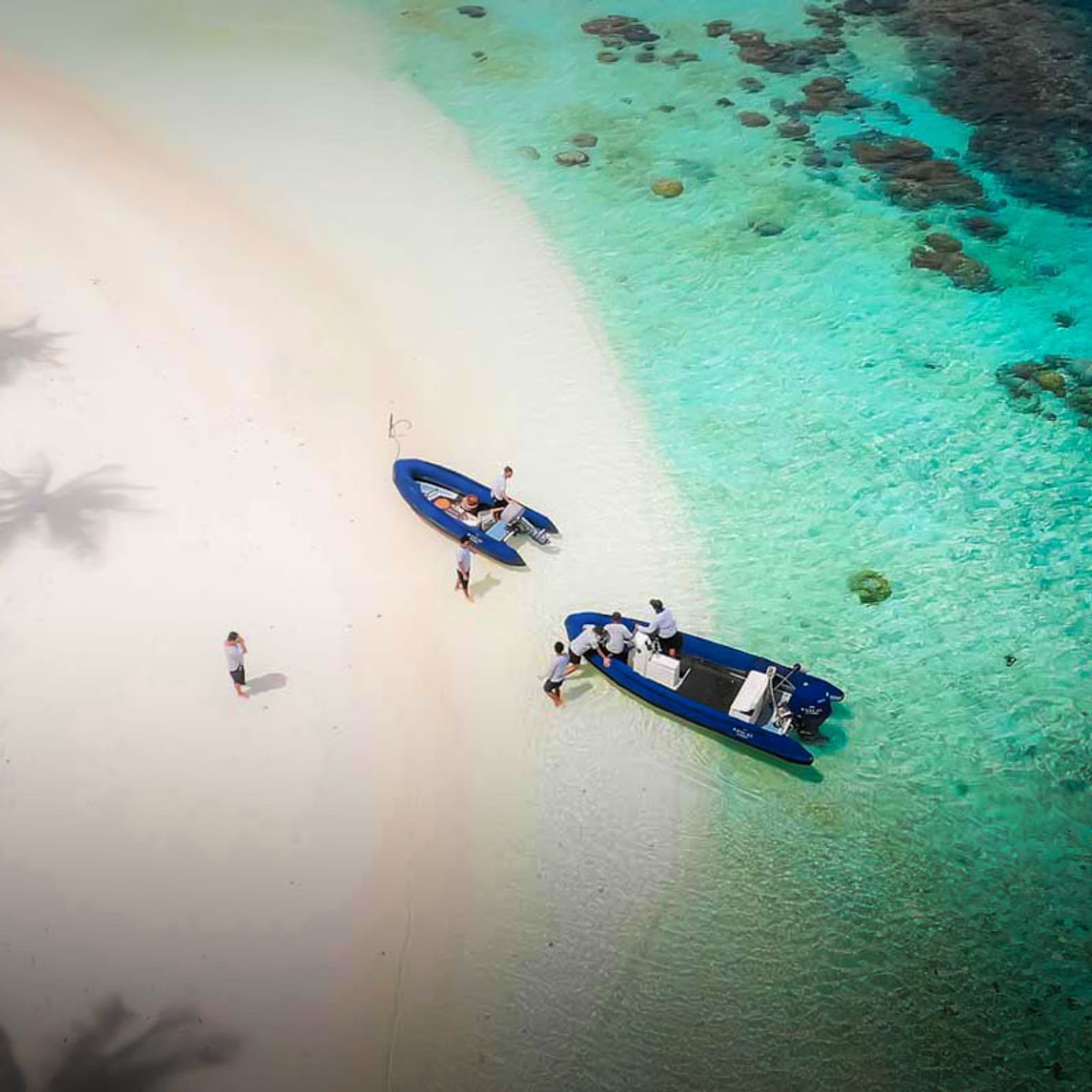

Inspired to explore?
Our team has sailed these waters for over a decade. Let us help you plan your own Indonesian adventure.