


Raja Ampat vs. Komodo
Both extraordinary. Not interchangeable.
Indonesia's two premier charter destinations offer very different experiences. Komodo is accessible and varied; Raja Ampat is remote and dive-focused. This is an honest comparison to help you choose the one that fits your group, your season, and what you most want from the water.
The Short Answer
Komodo is more accessible, more varied in its activities, and pairs underwater life with land-based experiences like dragon walks and volcanic hikes. It is the better choice for mixed groups, families, and first-time charter guests.
Raja Ampat is more remote, more focused on the underwater world, and holds the richest marine biodiversity documented anywhere. It is the better choice for serious divers, snorkelers who want reefs with exceptionally high live-coral cover, and travelers willing to go further for something out of the ordinary.
Both rank among the strongest dive destinations in Southeast Asia. Neither is a compromise. The right choice depends on your season, your group, and what matters most to you.
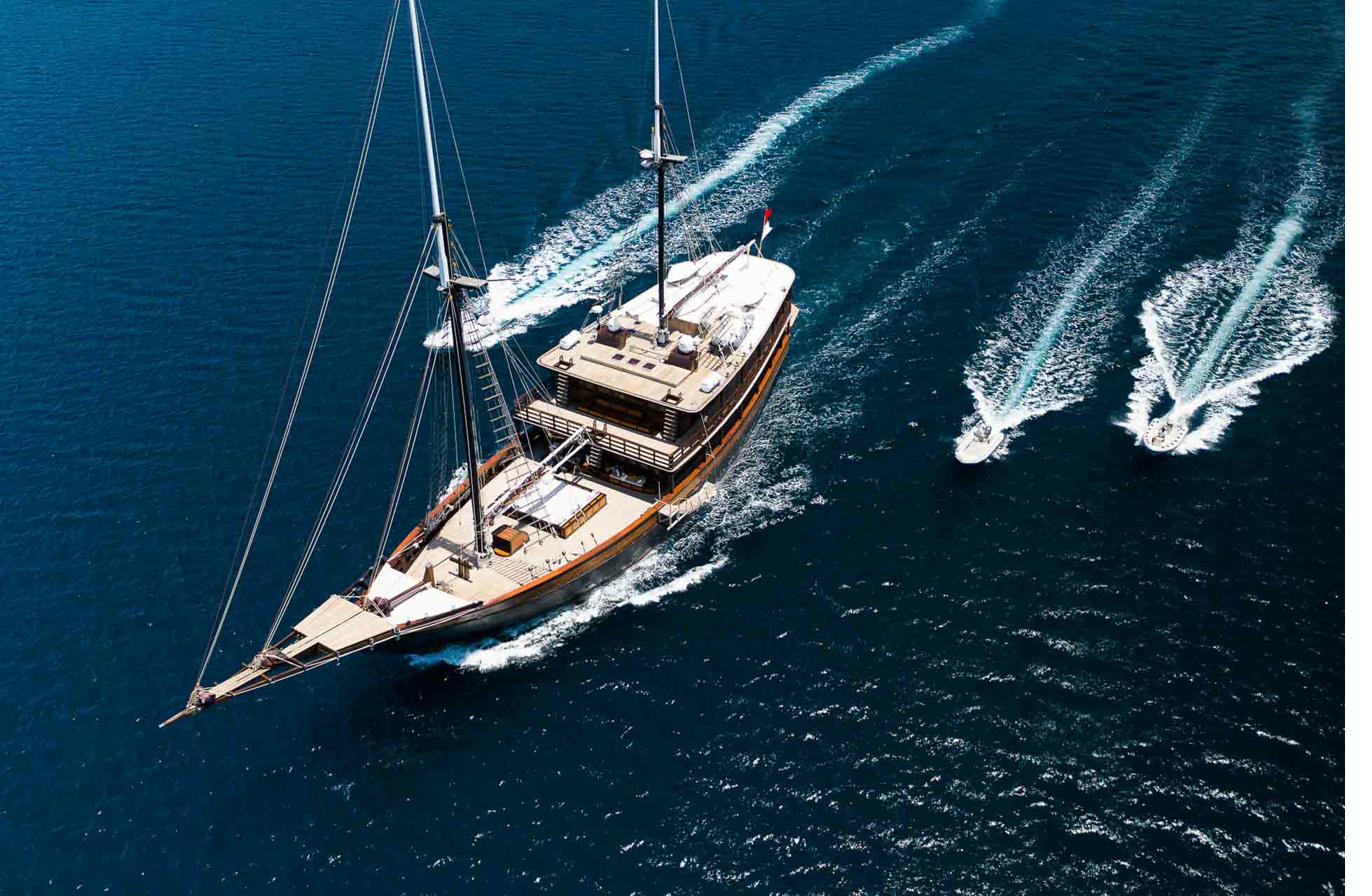
Komodo and Raja Ampat deliver different trips. The choice is about fit, not quality.
Getting There
Raja Ampat
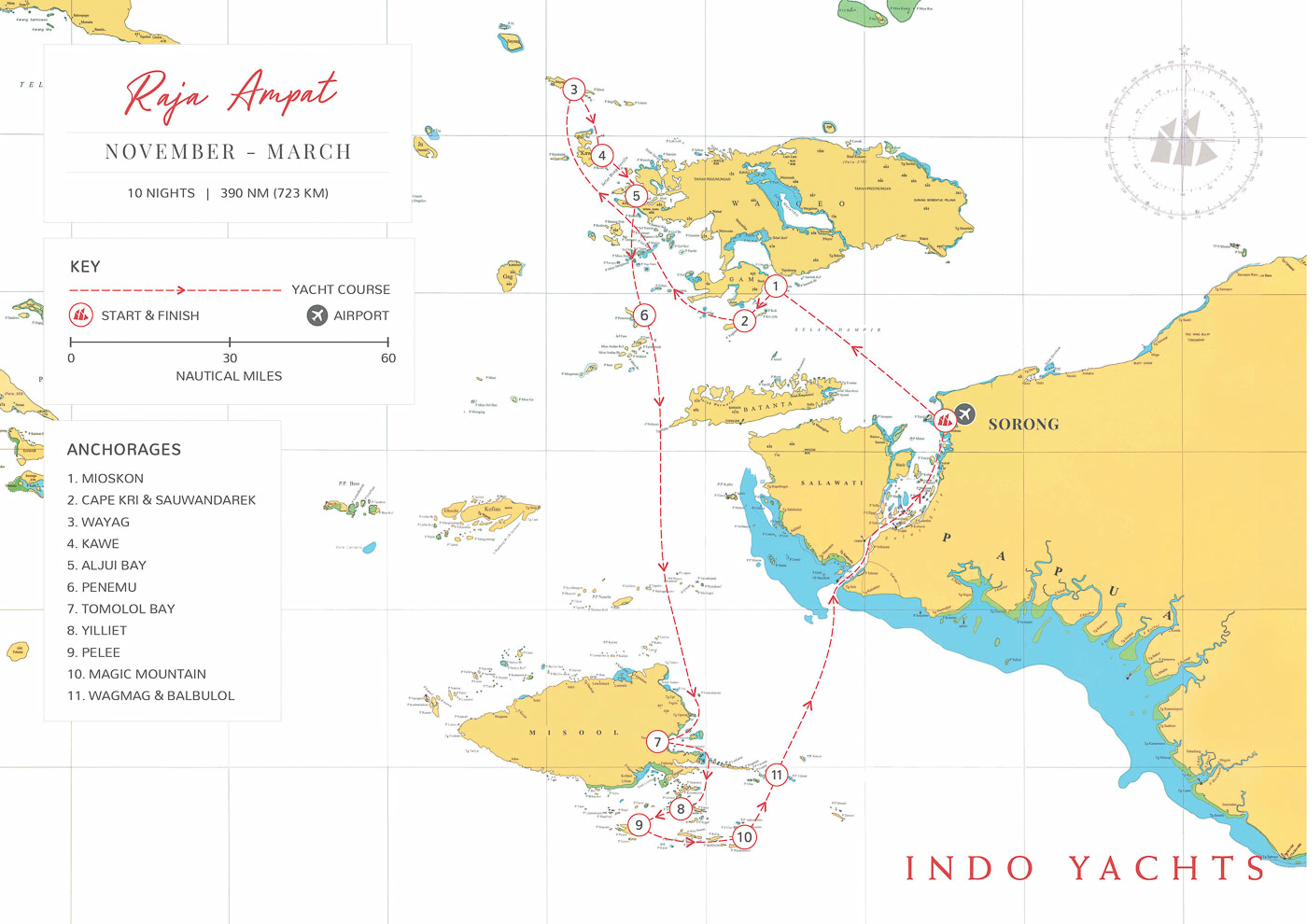
Fly to Sorong (SOQ) in West Papua. There are no direct international flights, so most routes connect through Jakarta or Makassar, often with an overnight in transit. From Sorong airport a short transfer reaches the harbour, and some yachts collect guests from a jetty near the airport. Plan for a full travel day from Bali. We handle the logistics and arrange accommodation at the transit points.
Komodo
Fly to Labuan Bajo (LBJ), roughly a 90-minute direct flight from Bali, with multiple daily departures and direct flights from Jakarta as well. From the airport it is a short drive to the harbour where your yacht waits. You can be aboard within a couple of hours of landing in Bali that morning, a genuine same-day connection.
The journey to Raja Ampat is part of what makes it special. By the time you reach Sorong, you have crossed time zones, left the tourist trail behind, and arrived somewhere genuinely remote. The effort filters out the crowds and preserves what makes Raja Ampat extraordinary.
Diving and Snorkeling
Raja Ampat
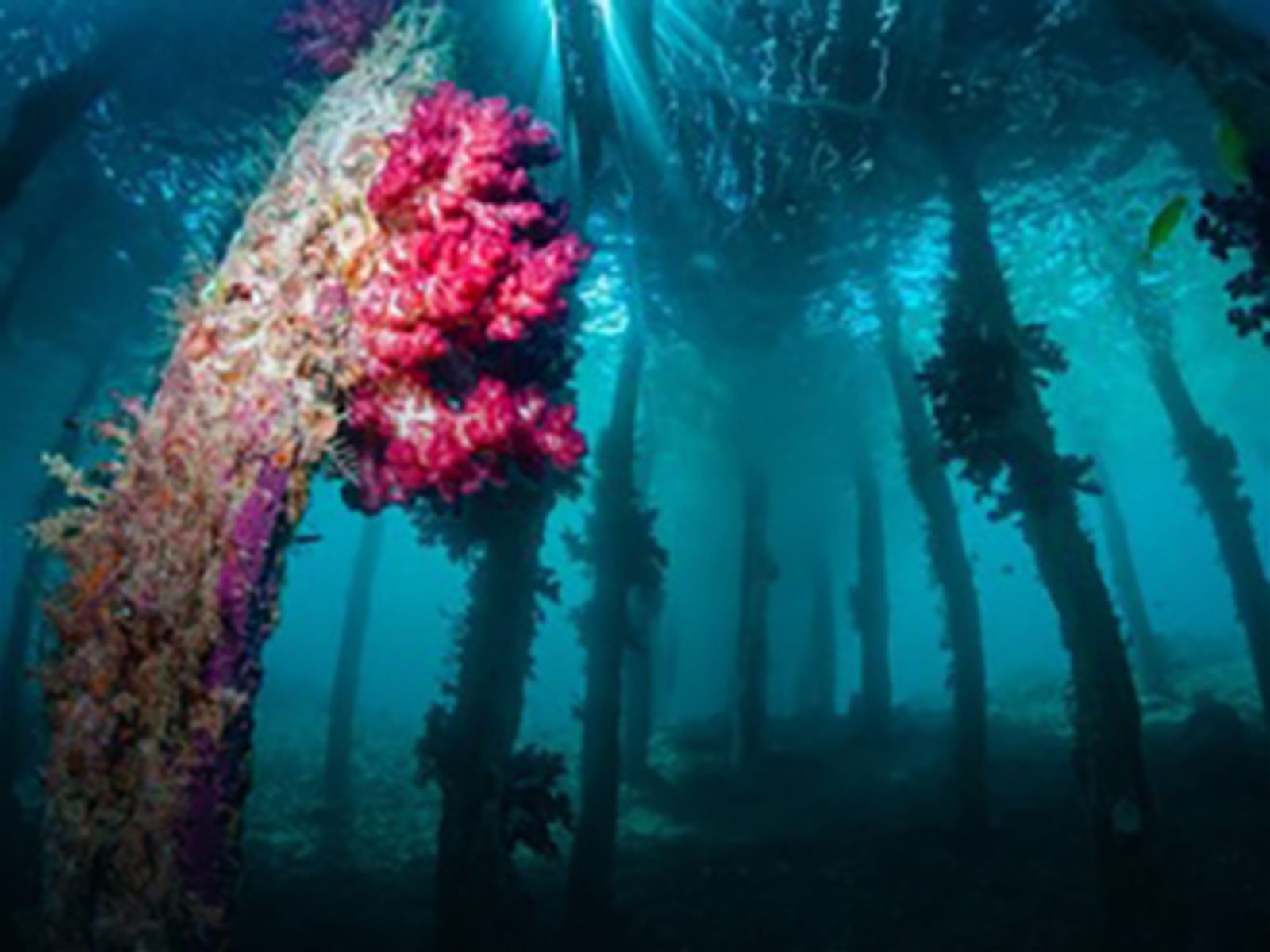
Raja Ampat sits at the heart of the Coral Triangle, the global center of marine biodiversity. The live-coral cover is the headline: some reefs run above 90 percent live hard coral. Cape Kri holds the record for fish species counted on a single dive, 374, logged by the ichthyologist Gerry Allen.
Expect reef mantas at Manta Sandy and Blue Magic, wobbegong and walking sharks, pygmy seahorses in the sea fans, soft-coral swim-throughs in the Misool region, and coral gardens of unusual density. Visibility typically runs 15 to 30 meters. The character is immersive rather than high-adrenaline: most sites suit all levels, and the reward is sheer abundance at every depth.
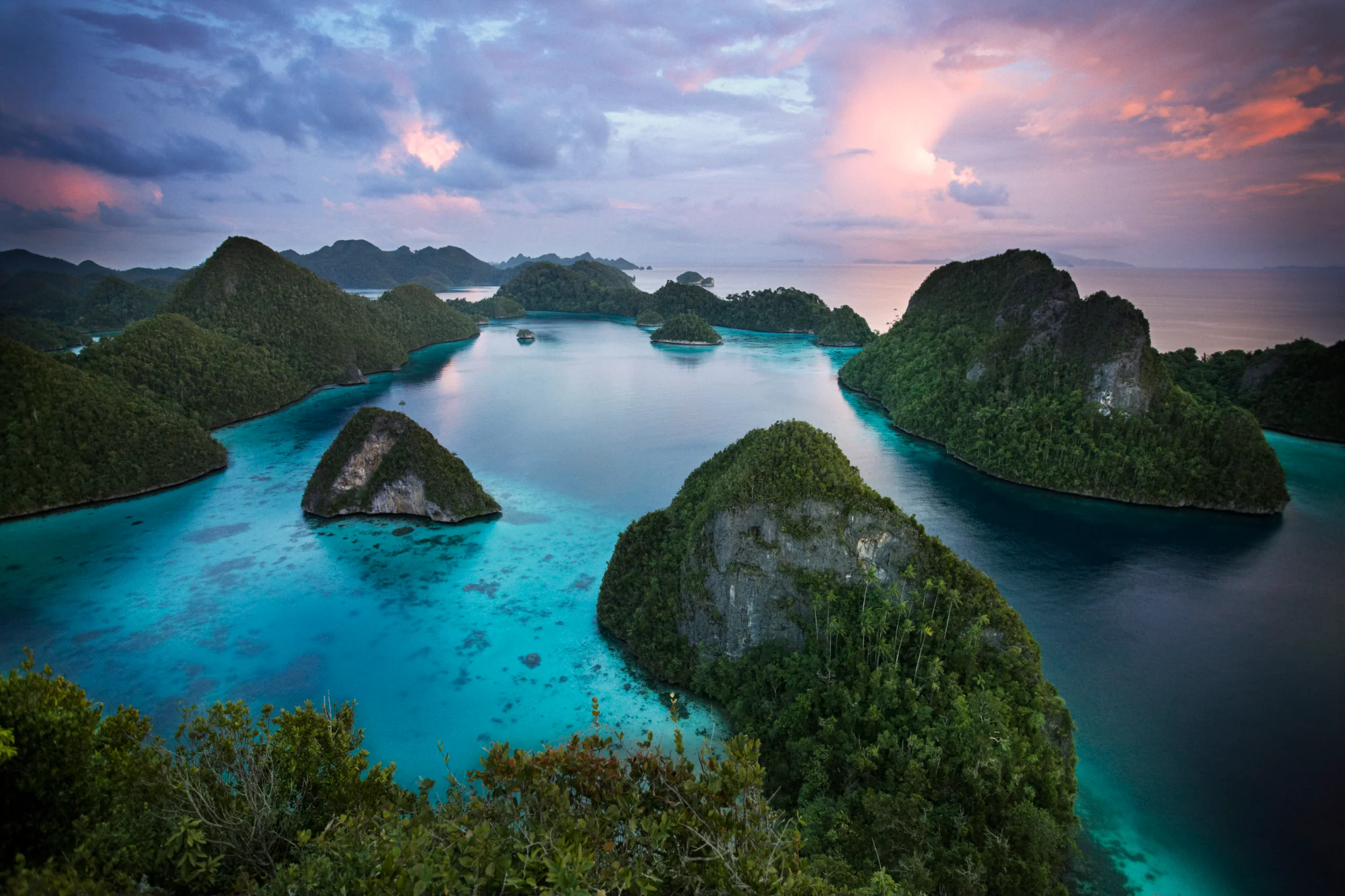
Raja Ampat sits at the center of the Coral Triangle; Komodo is defined by current.
Komodo
Komodo is defined by current. Warm Pacific water meets cooler, nutrient-rich Indian Ocean water, and the flows funnel through narrow channels to concentrate marine life. Batu Bolong, a single pinnacle in the middle of the park, regularly delivers grey reef sharks, Napoleon wrasse, and walls of schooling fish. Castle Rock and Crystal Rock are advanced drift sites where the current brings in large pelagics.
Makassar Reef offers manta encounters in shallow water that newly certified divers can manage, while the volcanic sand slopes around Rinca and Nusa Kode hold muck diving to rival Lembeh: frogfish, blue-ringed and mimic octopus, and a dense run of nudibranchs. Visibility runs 10 to 25 meters. The character is high-energy, built around current, big animals, and dramatic drift dives, with sheltered sites like Siaba Besar and Kanawa for beginners.
Snorkeling
Both reward snorkelers, in different ways. Raja Ampat has the edge for reef snorkeling: the coral gardens are dense and healthy enough that you see the diversity from the surface, and the shallow lagoons around the Wayag and Fam groups are warm and calm for less confident swimmers. On a flat day visibility can pass 20 meters. Komodo offers something Raja Ampat generally does not, manta snorkeling at Makassar Reef, where reef mantas visit cleaning stations in 5 to 15 meters of water and, conditions permitting, you can watch them circling below from the surface.
Above Water
Raja Ampat
Above-water highlights are nature-focused and quiet. Wayag's karst formations are among the most photographed landscapes in Southeast Asia, and Kabui Bay's narrow waterway between Gam and Waigeo feels like a river cut through a limestone cathedral. Early treks on Waigeo offer the chance to see the red bird-of-paradise at a dawn display site, and village visits to Arborek and other communities reach Papuan life that continues largely on its own terms.
Komodo
Komodo carries far more above-water variety: guided walks with Komodo dragons on Rinca alongside park rangers, the Padar Island viewpoint hike, Pink Beach coloured by foraminifera, flying-fox colonies at dusk, the volcanic landscape of Sangeang, and traditional boat-building villages. Labuan Bajo itself has restaurants and bars. The scenery reads more like dry savannah and volcanic hill country than the tropical green most people expect of Indonesia.
Komodo pairs diving with land: dragons on Rinca, the Padar viewpoint, volcanic hills.
Cultural Encounters
Komodo offers the more varied cultural contact: Flores has Catholic fishing villages, weaving communities, and traces of Portuguese colonial history. Raja Ampat's villages are smaller and more remote, with a Papuan culture distinct from the rest of Indonesia. Both are genuine, of very different character.
Seasons and Timing
The seasons are complementary, not competing. When one destination is at its best, the other is in its off period, so your travel dates often settle the question on their own.
Raja Ampat runs October through April. Visibility is strongest from October through December, and manta activity peaks in January and February. Christmas and New Year is the highest-demand window, and the most sought-after yachts for those dates hold a year or more ahead.
Komodo runs April through October. The seas are calmest from April through June and again in September and October. Manta activity peaks across the middle of the season, and July and August are the busiest months. The upwelling in August and September brings cooler water and larger pelagics.
If your dates fall in April or October, both can be excellent. April is early Komodo season, with calm conditions and building activity. October is early Raja Ampat season, with strong visibility and quiet anchorages.
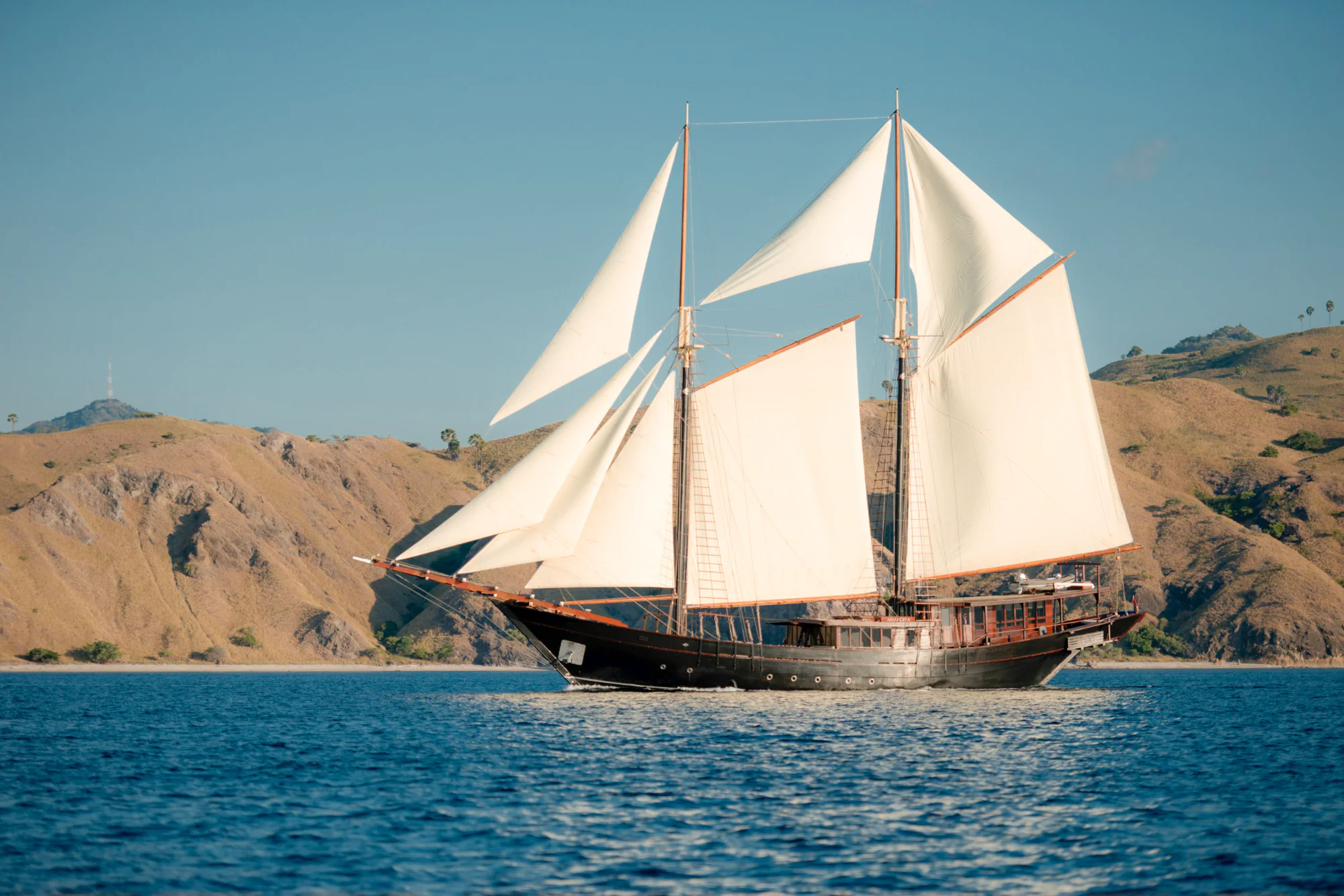
Seasons are complementary, so your travel dates often decide the destination.
Cost
The per-night yacht rate is generally the same whichever destination you choose. The difference in total cost comes from two things: duration and flights.
Raja Ampat charters tend to run longer, commonly seven to ten nights against five to seven for Komodo, because the access logistics reward a longer stay. Flights cost more as well, since reaching Sorong is a longer, multi-leg journey than the short hop from Bali to Labuan Bajo. The per-person, per-night cost is comparable; the total tracks the length of the trip. For a full breakdown of what is included and how to read a quote, see our pricing guide.
Who Each Destination Suits
Choose Komodo if:
- You want easy access from Bali, same-day connection
- Your group includes non-divers who want active land-based experiences
- You are travelling with children (dragons, beaches, and hikes captivate all ages)
- You want variety: diving, hiking, wildlife, cultural visits, water sports
- You have 5 to 10 nights available
- You are a first-time charter guest looking for the broadest introduction to Indonesia
- Your travel window is April through October
Choose Raja Ampat if:
- Marine biodiversity is your primary motivation
- You are a serious diver or snorkeler seeking some of the healthiest reefs anywhere
- You value remoteness and want to be far from tourist infrastructure
- Kayaking through karst lagoons, birdwatching, and nature photography appeal to you
- You have 7 to 14 nights, and the extra time is worth the access logistics
- Your travel window is October through April
Doing Both
Many of our returning clients charter in Komodo one season and Raja Ampat the next. The two complement each other, and seeing both gives a complete picture of what Indonesian waters hold.
Doing both on a single charter is another matter. Raja Ampat and Komodo sit roughly 2,500 kilometers apart, with no practical route between them by yacht, so a crossing itinerary is rarely worth it once you account for the distance and the seasonal transition. What does work, for guests with about two weeks and flexible timing in a shoulder month, is two back-to-back charters: a Komodo trip, a night back in Bali, then a flight to Sorong and a second yacht in Raja Ampat. We have arranged exactly that.
A common pattern is simpler still: a seven-night Komodo charter in July or August, then a ten-night Raja Ampat charter the following December or January. Same crew where we can manage it, a different world each time.
Many guests charter one region one season and the other the next.
If you are genuinely torn, tell us your travel dates and we will tell you which destination is in peak condition. Season usually makes the decision for you. April through October: Komodo. October through April: Raja Ampat. The answer is almost always that simple.
Practical Guides
Everything you need to know before chartering in Indonesia. From costs and logistics to destination comparisons and packing lists.
Continue Exploring
Dispatches from Indonesia's most extraordinary waters. Yacht features, expedition reports, and the stories behind our most memorable charters.
Inspired to explore?
Our team has sailed these waters for over a decade. Let us help you plan your own Indonesian adventure.